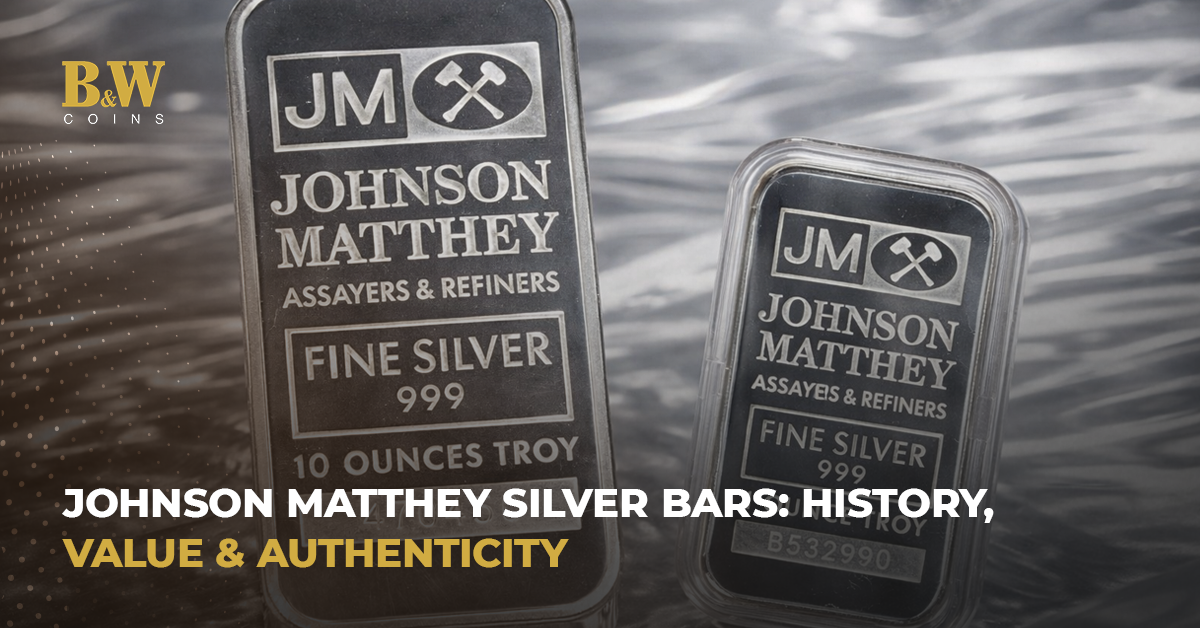
In the North American bullion market, Johnson Matthey silver bars are shining. They are no longer manufactured, they are well known by dealers, and their prices are superior to the best that generic bars can command. This does not only give a guide on their background, their physical appearance, authentication and the reason why collectors and investors still want them on the second hand market.
The Origin of Johnson Matthey Silver Bars
Johnson Matthey was founded in London in the year 1817 and grew to be one of the most well-known brands in precious metals in the world. By the mid 20th century, the company was among the earliest of the members of the London Gold Fix, the few that decided the daily benchmark price of gold. That fame gave its silver wares a certain plausibility that very few smelting plants have enjoyed.
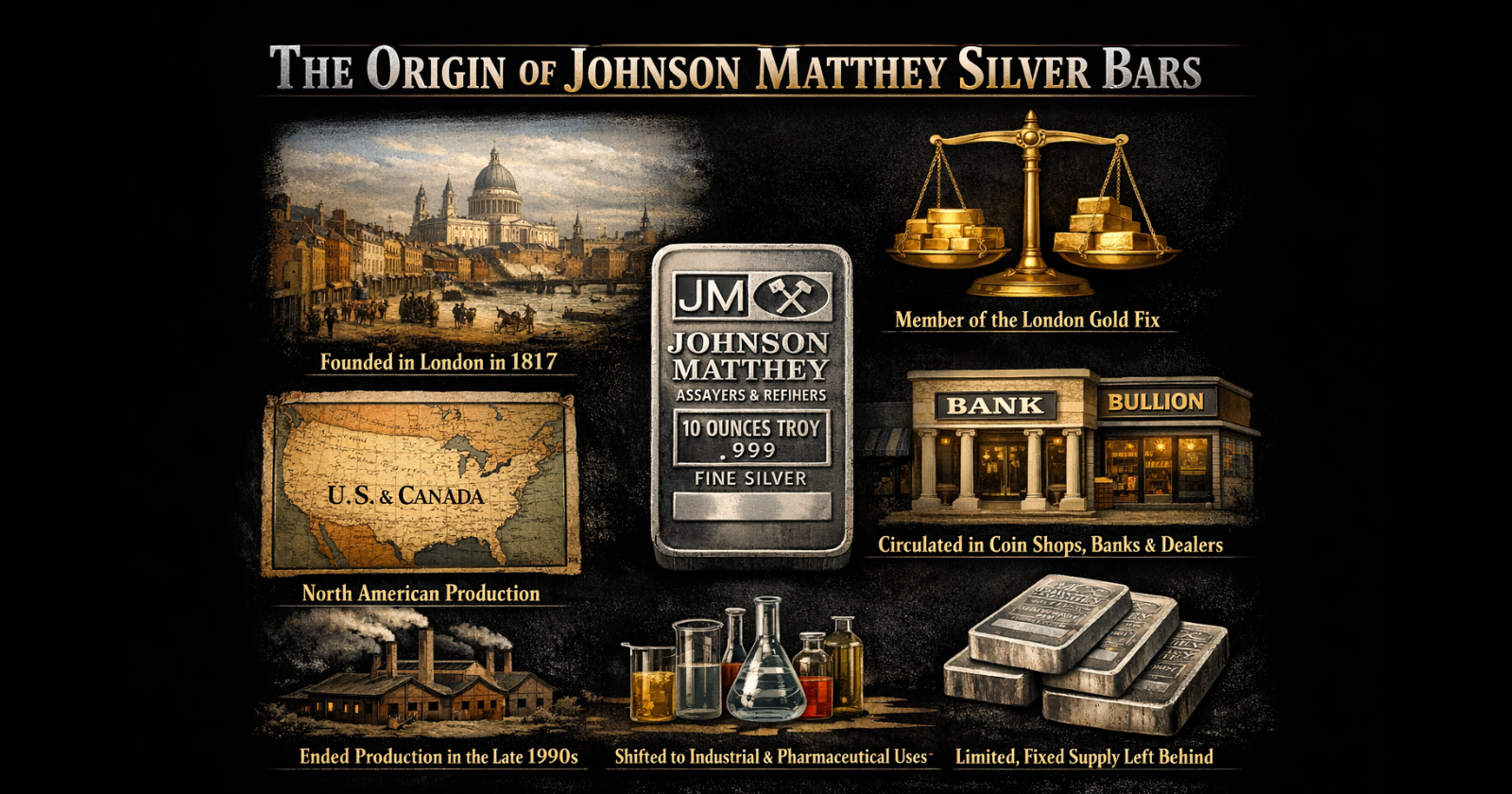
JM bars were minted in North American operations, which circulated through the coin shops, banks, and bullion dealers in Canada and the United States, and when the company restructured and discontinued the silver bar operation, it left a fixed supply that was not being replenished.
Why These Bars Became Collectible
Production of any commodity that becomes discontinued is the starting point of any collector premium. In the market with no new JM bars that could be introduced, the dealers had no choice but to acquire existing inventory in the market via estates, personal collections and long term investors selling inventory. That turned the supply into the production, into the secondary-market supply and changed the pricing and perception of the bars.
Brand recognition and a proven record of reliability is what maintains the demand at the same level. The JM bar is not silver, which is anonymous. Buyers know about the refinery itself, its institutional component in the market, and the time frame represented by these bars. That history makes evident that the purely generic silver bars regardless of their purity are not attractive on premiums.
Understanding Johnson Matthey Silver Bar Characteristics
The most common pieces in the present-day secondary market include 1 troy ounce and 10 troy ounce bars of.999 fine silver. And even larger like 100 oz bars and kilo bars were commissioned but are less traded in collector transactions.
Poured bars were produced as well as pressed (minted). Poured bars have a more wavy, uneven surface due to the cast silver that is in a mold. The face of pressed bars is cleaner, smoother. They are both authentic; it is the difference in production technique and epoch, rather than quality.
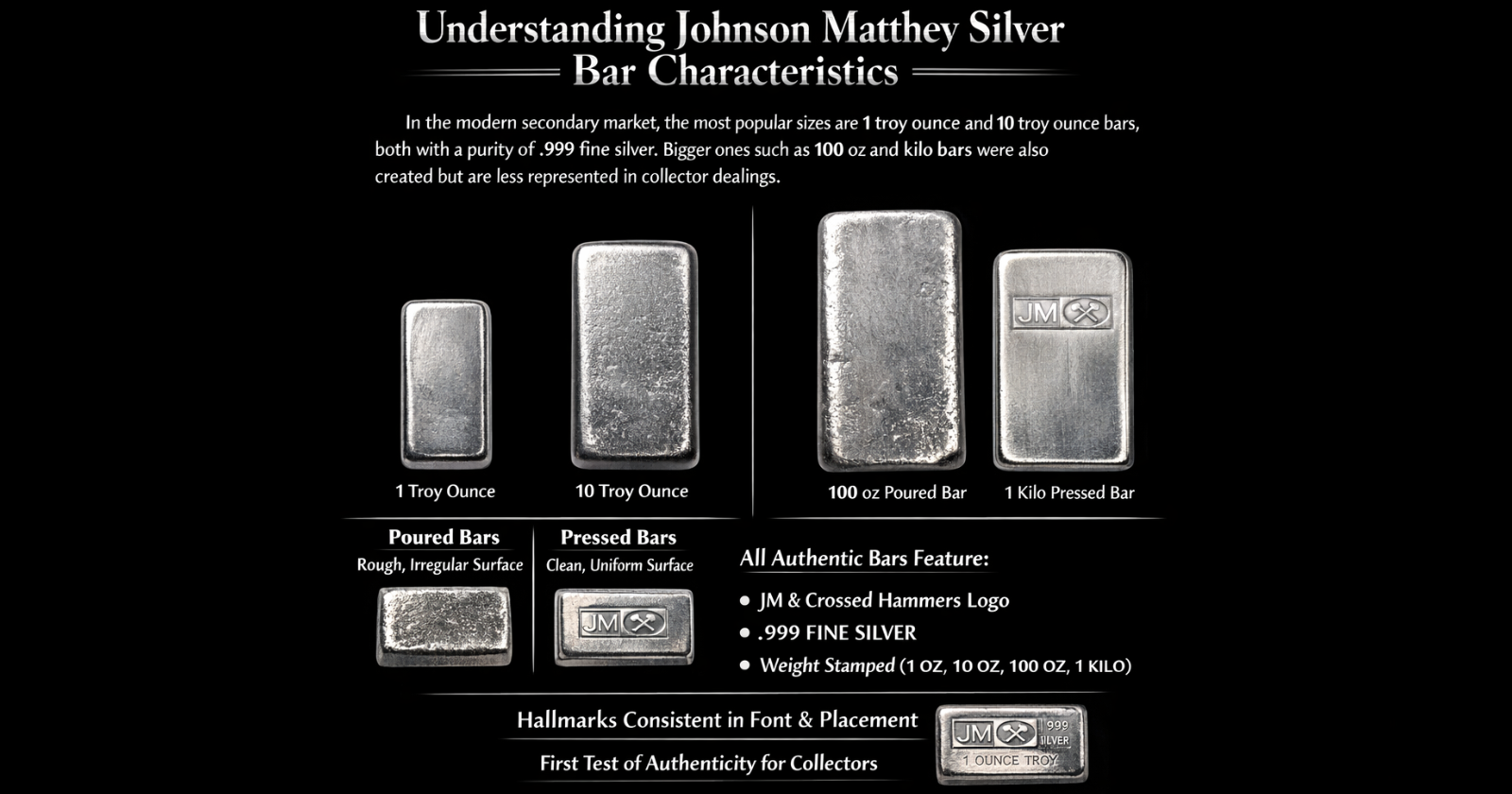
All the real bars have the hallmark, purity designation and marking of weight of the JM crossed hammers. The font form, the richness of the stamp and the pattern of the hall marks is always the same in the time of production and the information is the first test of authenticity applied by the experienced collectors.
Real Examples Seen in Today’s Market
Johnson Matthey 1 oz .999 Fine Silver Bar Standard Collector Grade
The 1 oz bar is the most accessible entry point for collectors new to vintage bullion. It carries the full JM hallmark with crossed hammers and .999 purity designation. These bars trade at a clear premium over spot silver more than a comparable current-production 1 oz bar would command. Their small size makes authentication and storage straightforward, which adds to their appeal in the secondary market.
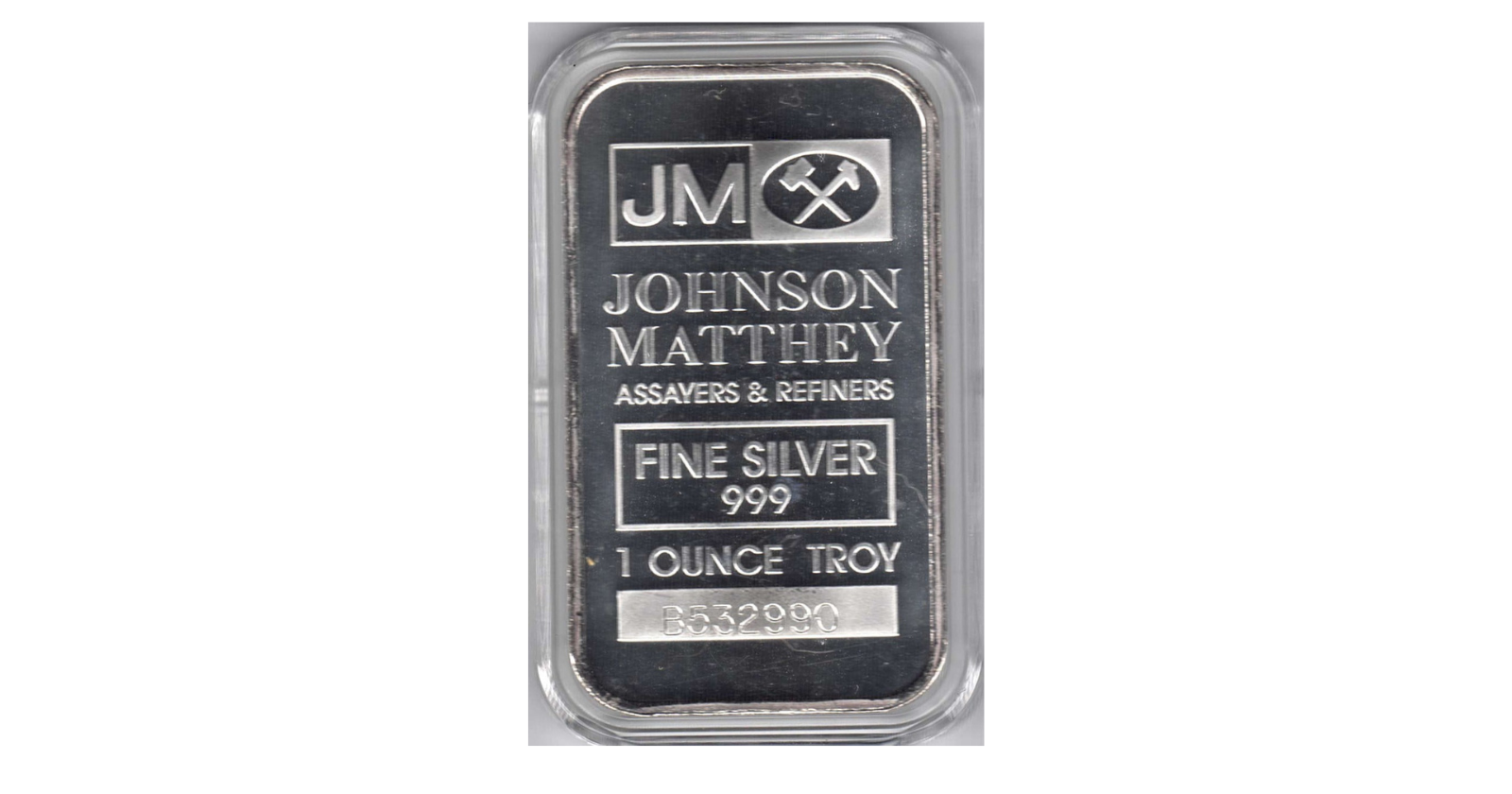
Johnson Matthey 1 oz Silver Bar Historic Grade
Some 1 oz JM bars show visible patina, older surface character, and handling marks from decades of circulation. Dealers refer to these loosely as historic grades. The silver content is unchanged, and for many collectors the aged appearance adds provenance value rather than subtracting from it. These bars often enter the market through estate liquidations and represent an honest record of how the bar was stored and passed through hands over time.
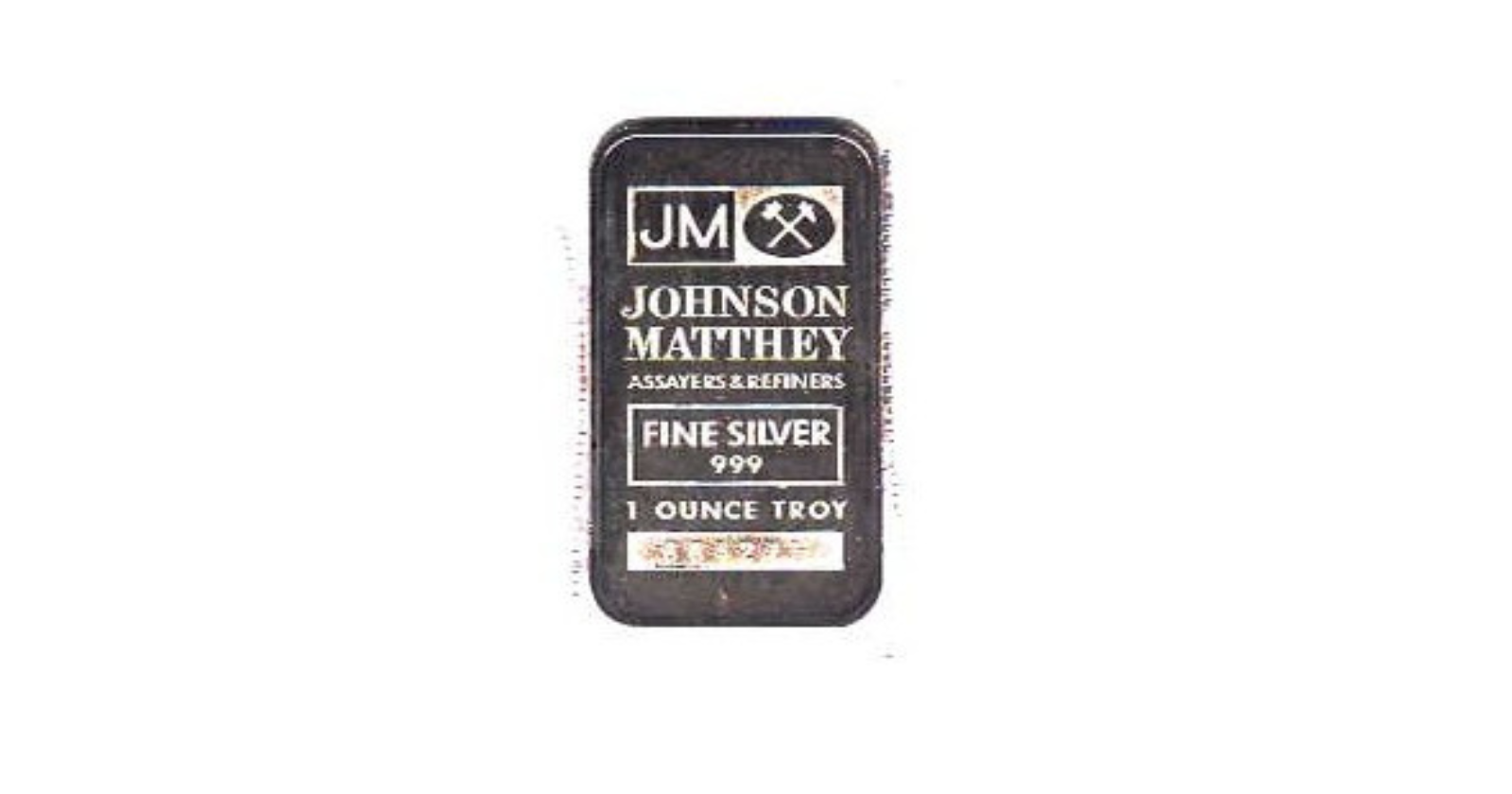
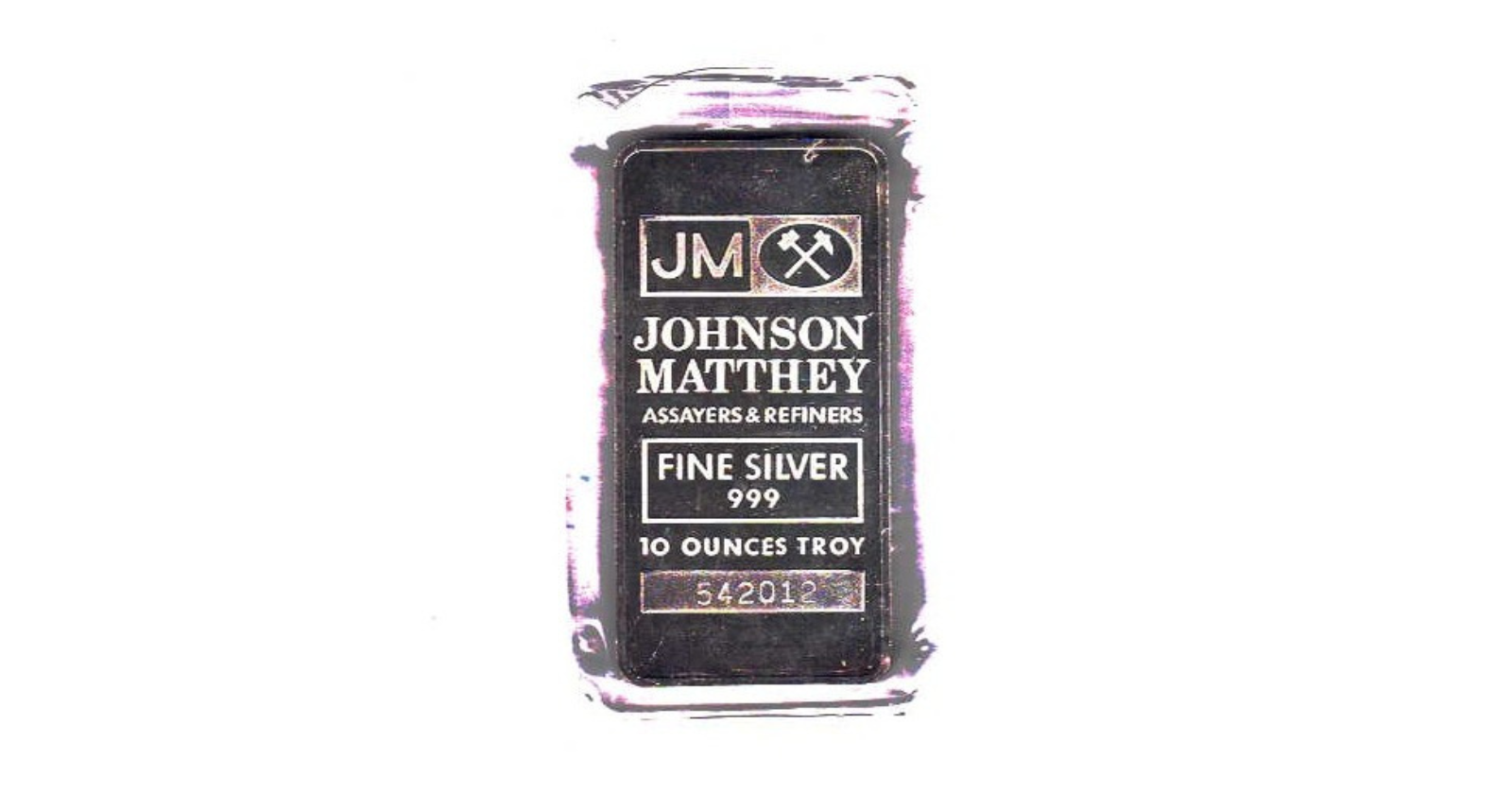
Johnson Matthey 10 oz .999 Fine Silver Bar Collector Bar
The 10 oz bar is the format most associated with Johnson Matthey’s institutional production era. At ten ounces, hallmarks and purity stamps appear at a clear, readable scale. Fewer of these appear on the secondary market at any given time compared to the 1 oz size, which drives proportionally stronger premiums. A well-preserved example with sharp hallmarks is one of the more sought-after pieces in vintage North American refinery silver.
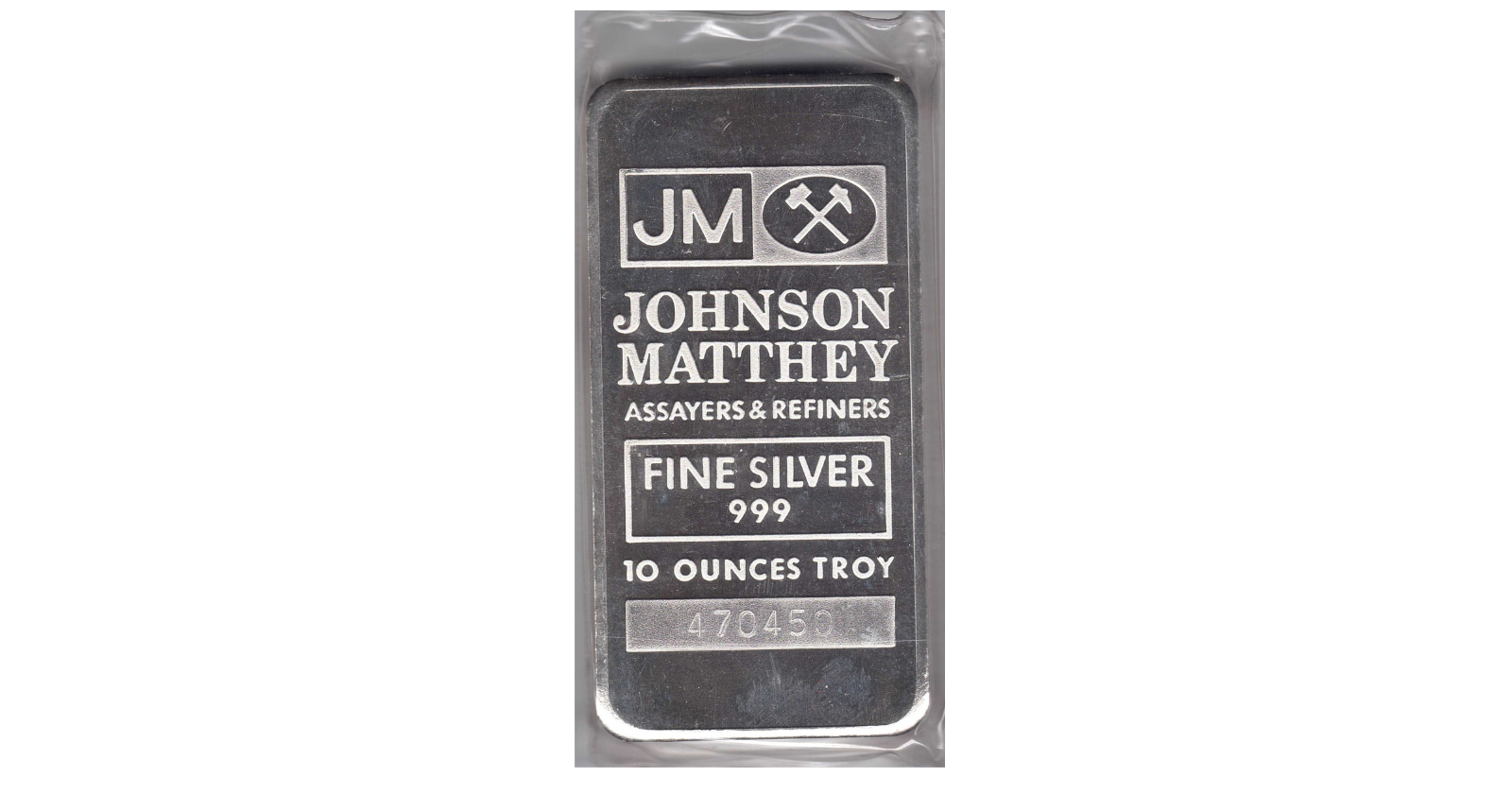
Johnson Matthey 10 oz Silver Bar Standard Market Grade
Many 10 oz JM bars in circulation carry light contact marks, minor oxidation, or surface wear from years in bank vaults and safety deposit boxes, all expected for secondary market bullion. These cosmetic factors do not affect silver content or the bar’s identity as a genuine JM product. For buyers focused on silver weight over appearance, standard market grade examples often offer a more accessible price than pristine collector-condition pieces.
How To Identify Authentic Johnson Matthey Silver Bars
Weight is the first check. A genuine 1 oz bar weighs 31.10 grams; a 10 oz bar weighs 311.0 grams. This will be proved in a short time by a calibrated digital scale with a sensitivity of 0.01 grams. Poor quality counterfeits cannot pass this test at all.
Hallmark examination comes next. The JM logo and crossed hammers should be cleanly struck with consistent depth and spacing. The purity font contains certain proportions that are hardly accurate in counterfeit dies. A side-by-side comparison between a bar and confirmed authentic specimens of a bar to be found on respectable dealer archives and collector reference sites, assists in the detection of minor variations in font, placement, and depth of impression.
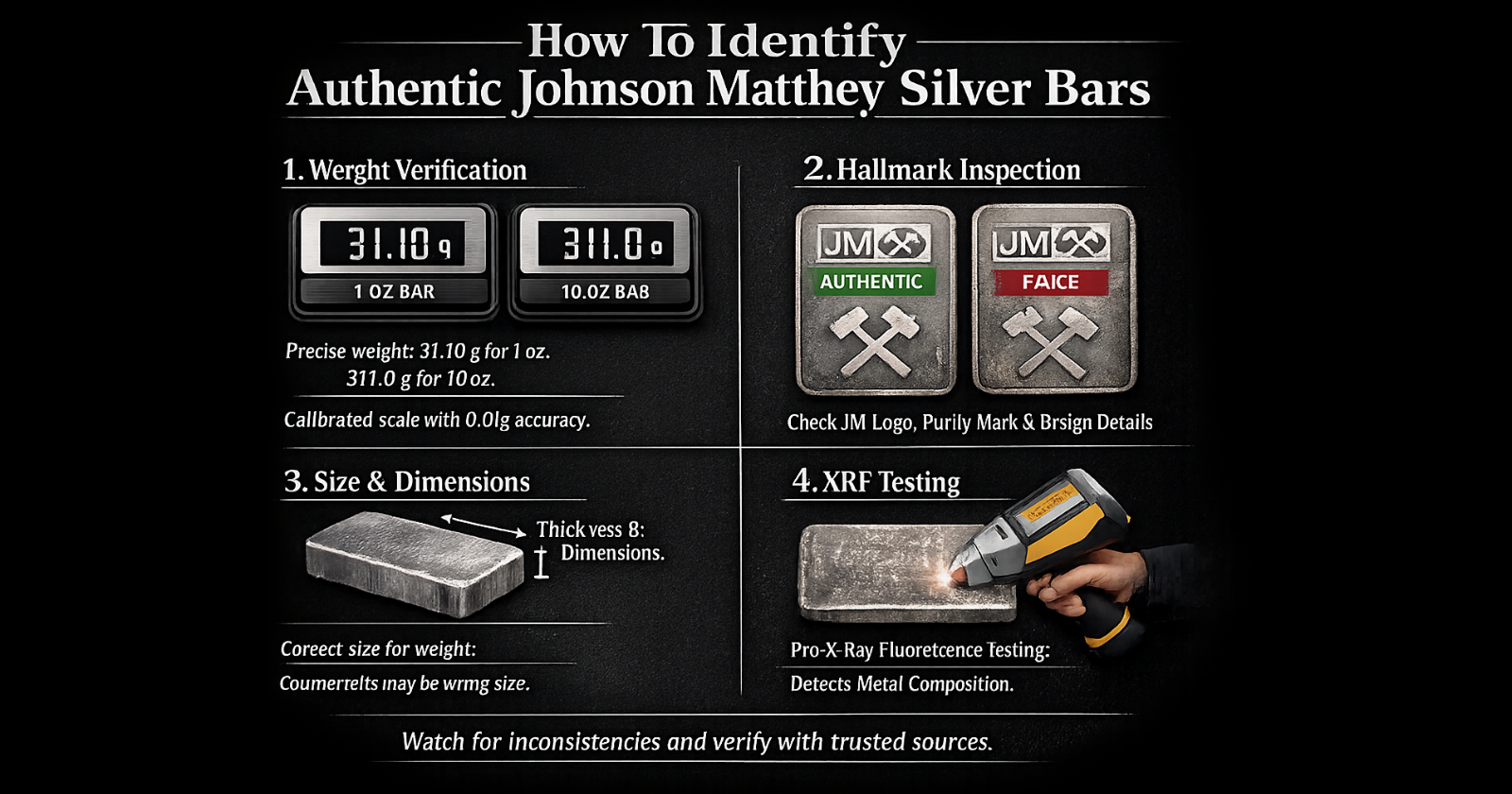
Measurement is added to by another layer, dimension. Silver is known to have a weight density and thus a bar of appropriate weight also must have appropriate size within limited ranges. Base metals counterfeits can be of equal weight due to added mass but will be different in terms of thickness or width. Professional XRF (X-ray fluorescence) analysis at a bullion dealer or an assay service can be used to obtain a conclusive result of the composition of a major purchase without it being damaged.
Why Johnson Matthey Bars Often Trade Above Melt Value
The value of the underlying raw silver at the current spot is the floor. There are three clear reasons why JM does not permit trade beyond that floor.
First, brand recognition. Johnson Matthey is one of only a handful of long-discontinued refineries in North American secondary market bullion whose name has some intrinsic value to buyers. This willingness to pay a premium is a market phenomenon that is already recorded, and not speculation.
Second, fixed supply. JM bars have not been produced in the recent past. Every bar is lost out of circulation, either by melting or loss. A decrease in the supply at an unchanged demand supports the premiums in the long term.
Third, liquidity. A JM bar is easy to sell. Dealers know it is at first sight. Such a resale value actually influences people who must resell when they must, and conscious consumers take it into account when they are making decisions about how much they will pay at the point of purchase.
Collector vs Investor Perspective
Collectors treat JM bars as historical objects. They study the hallmark changes, target specific intervals of production and keep bars on a long term basis with little consideration of the daily spot prices. The value above melt is to a collector the cost of ownership of something of genuine provenance.

The bars are regarded by investors as silver with higher resale values. This is because they will be ready to buy at a high price because they are aware that they will be in a position to restore the price and even better once they are able to sell to a market who values the brand. The value of the collector becomes an internal advantage to that of having unnamed silver.
The majority of the buyers are both mode workers and that is one of the reasons why JM bars are not expensive. They can be sold to a bullion dealer, a personal collector or auctioned which one of the two avenues will yield the best revenue.
Frequently Asked Questions
Q. Why are Johnson Matthey silver bars more expensive?
Ans. JM bars carry a premium because they are discontinued, brand-recognized, and traded in a secondary market where buyers consistently pay above melt value. Supply is fixed and slowly declining. That combination of scarcity and demand supports prices above what current-production generic bars command.
Q. Does Johnson Matthey still make silver bars?
Ans. No. Johnson Matthey exited the silver bar market when it restructured its precious metals division. The company today focuses on industrial chemistry, catalysis, and pharmaceutical manufacturing. All JM silver bars available now are original secondary market pieces from the production era.
Q. Are Johnson Matthey silver bars a good investment?
Ans. That depends on individual goals and risk tolerance. This article does not offer financial advice. JM bars hold .999 fine silver, carry consistent collector premiums, and trade with strong secondary market liquidity. Buyers who understand both the bullion and collectible dimensions tend to make more informed decisions.
Q. What is Johnson Matthey fine silver 999 worth?
Ans. Value is the silver melt price at the current spot plus a collector premium. The premium varies by condition and size. A 1 oz bar in solid condition trades noticeably above spot; a 10 oz bar commands a larger dollar premium. Verify current pricing through active dealer listings or recent auction results.
Q. How can I tell if a Johnson Matthey bar is real?
Ans. Check weight first (31.10 g for 1 oz; 311.0 g for 10 oz). Examine the JM hallmark for clean, consistent stamping. Compare against confirmed authentic examples. Use calipers to verify dimensions. For significant purchases, request XRF testing from a reputable dealer or assay service.
Closing Insight
The silver bars produced by Johnson Matthey are not the richest or the most decorative vintage bullion. What they sell is something more practical: a known name and a history written down and a secondary market that has always been willing to pay both. To the collectors, that is provenance. To the investor, it implies liquidity. To one who has not encountered bullion before it is a simple illustration of why identity at the refinery counts and why not all the silver on one’s hands is going to fetch the same price.