If you have an old Canadian one-dollar bill at home, one of the first questions that comes to mind is simple: is it worth more than face value? Many people find these notes in family albums, inherited collections, storage boxes, or drawers and want to know whether they are common keepsakes or collectible banknotes with real market value. The answer depends on several details, including the year, series, signatures, grade, rarity, and overall condition of the note.
Some old Canadian $1 bills are collected mainly for nostalgia, while others are valued for their historical importance, low survival in high grade, or special varieties such as the famous Devil’s Face note. Collectors also pay attention to paper quality, serial number appeal, language type, and whether a note is circulated or uncirculated. That means two banknotes that look similar at first glance can carry very different values in the collector market.
This guide explains how to identify a Canadian one-dollar bill, what affects its value, which rare features matter most, and how collectors judge old banknotes today. Whether you are trying to price a note, compare different issues, or understand what makes one example more desirable than another, this article will give you a clearer picture of what to check before buying, selling, or holding an old $1 bill from Canada.
Quick answers first:
- Canada 1 dollar bill value depends on year, series, condition, rarity, signatures, and collector demand.
- 1 dollar bill Canada worth can range from modest collector value to much stronger premiums for scarcer or higher-grade examples.
- An old 1 dollar bill Canada note is not automatically rare, but some issues are much more desirable than others.
- Notes like the 1954 Devil’s Face, early 1935 French issues, and high-grade 1937 notes often receive stronger attention from collectors.
- The best way to judge a 1 dollar bill Canada note is to identify the exact issue first, then compare rarity and condition.
What Makes a Canada 1 Dollar Bill Valuable?
The value of an old Canadian one-dollar bill is shaped by much more than age. Many notes survive in average condition, so collectors usually pay closer attention to the exact series, signature combination, eye appeal, preservation, and scarcity in the market. A note from a famous design type may attract stronger demand than a more common issue, especially if it is part of a recognized collector category.
Condition also changes everything. Two notes from the same year may have completely different market value because one is folded, stained, or softened from heavy handling, while the other is crisp, original, and better preserved. That is why people searching for Canada 1 dollar bill value should never rely on the date alone. Real value comes from how desirable the note is to collectors today.

Key Old 1 Dollar Bill Canada Types Collectors Should Know
Canada’s old one-dollar bills span several important series, and some have become much more collectible than others. Among the best-known examples are the 1935 issues, the 1937 Bank of Canada notes, and the famous 1954 series. Each one represents a different part of Canadian paper money history, and each carries its own demand among collectors.
The 1954 issue often stands out because of the well-known Devil’s Face variety, while the 1937 notes remain popular because of their classic design and early Bank of Canada history. Even within the same denomination, small differences in language version, grade, and series type can change how the market views the note. For someone trying to understand old 1 dollar bill Canada value, knowing the note type is the first serious step.
How Condition Affects 1 Dollar Bill Canada Worth
When collectors evaluate a one-dollar bill, condition can have a major effect on its appeal and price. A note with folds, rounded corners, stains, writing, or heavy wear is usually treated very differently from a note that still feels crisp and original. Even when the series itself is collectible, lower condition can reduce buyer interest unless the note is genuinely scarce.
This is why grading terms matter so much in paper money. Descriptions such as Fine, About Uncirculated, and Uncirculated help buyers understand how much handling the note has seen. For many collectors, a high-grade note is far harder to find than an average circulated example. So when people ask about 1 dollar bill Canada worth, condition is often one of the biggest parts of the answer.
Featured Old Canada 1 Dollar Bills from B&W Coins
Below are five strong examples that fit naturally into this value guide and show how different Canadian one-dollar bills can appeal to collectors for different reasons.
1954 Bank of Canada $1 Devil’s Face BC-29A Banknote
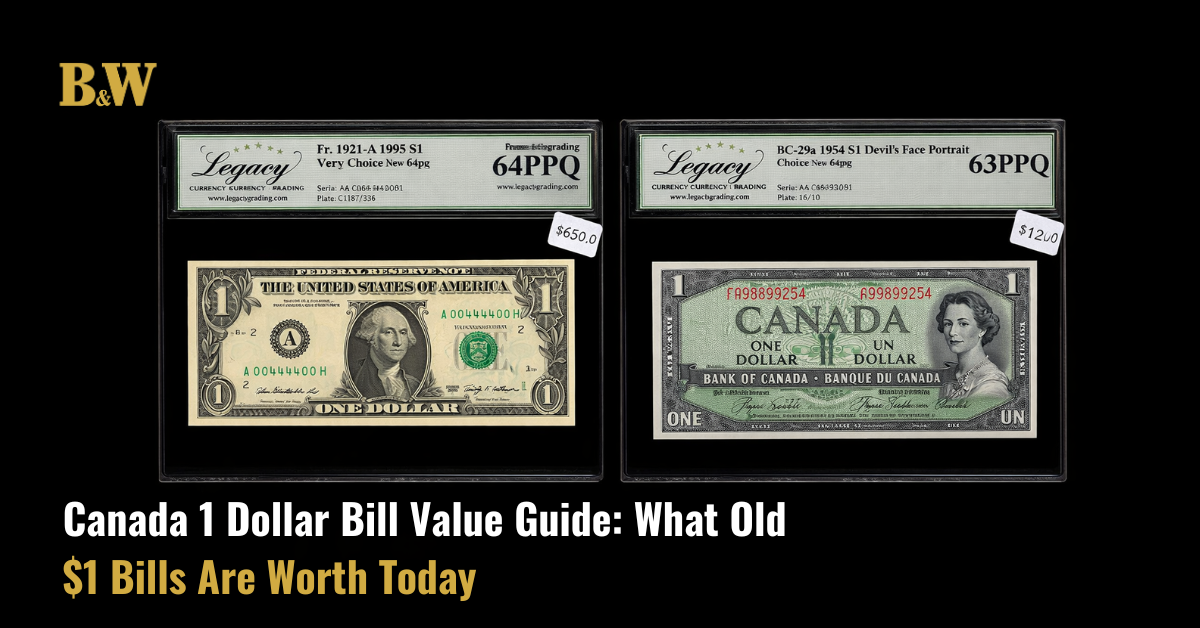
The 1954 Bank of Canada $1 Devil’s Face BC-29A Banknote is one of the most recognized and talked-about Canadian one-dollar notes. It features the young Queen Elizabeth II portrait with the famous hair detail that created the illusion collectors refer to as the “Devil’s Face.” Because this design was replaced, it became one of the most memorable varieties in Canadian paper money and remains highly collectible today.
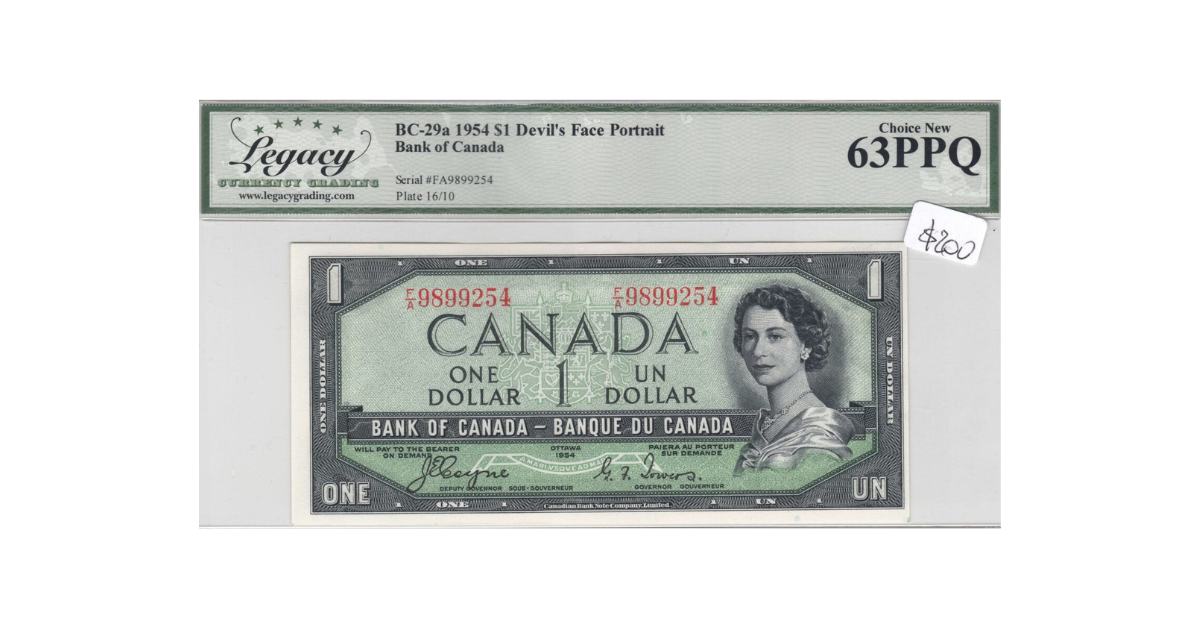
This note is important in any Canada 1 dollar bill value guide because it reflects the exact kind of issue that makes old paper money more than just old currency. Its collectible appeal comes from a mix of strong design recognition, historical controversy, and lasting demand. For many collectors, a Devil’s Face note is not just a banknote but a centerpiece item in a Canadian currency collection.
1995 $1 Federal Reserve Note – Legacy Grading 64 PPQ – Radar Serial Number
While this is not a Canadian one-dollar bill, the 1995 $1 Federal Reserve Note – Legacy Grading 64 PPQ – Radar Serial Number is still a useful collector comparison because it highlights how special features can add value to paper money beyond face value alone. Radar notes are popular because the serial number reads the same forward and backward, and this example adds extra appeal with its repeating center pattern.
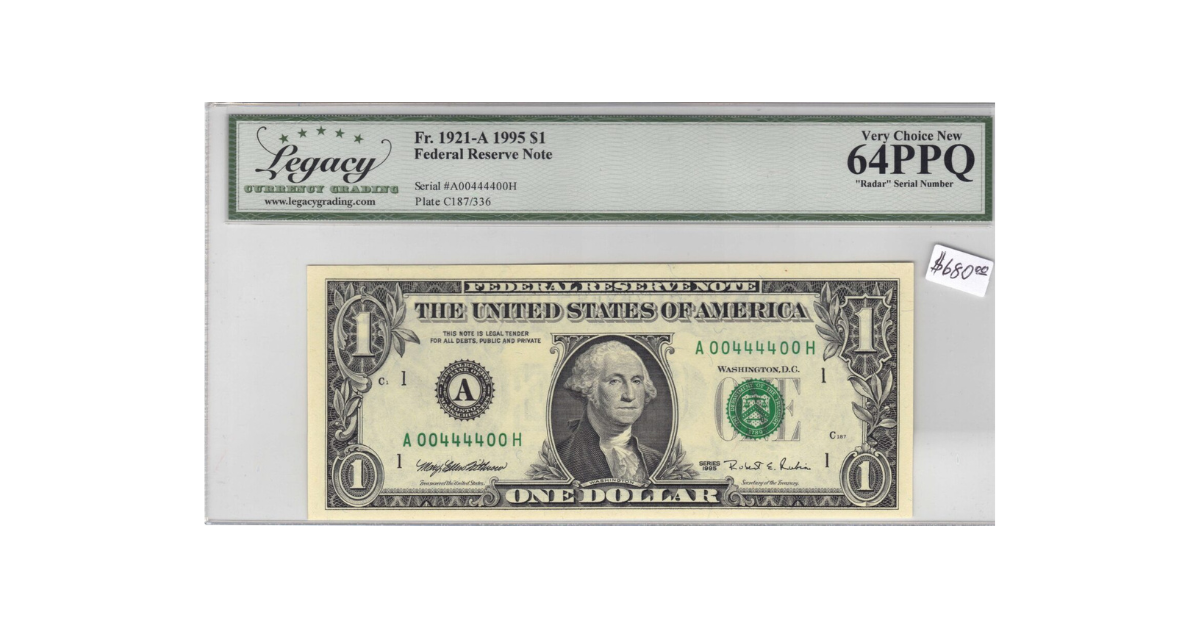
Its inclusion also helps readers understand a broader collecting truth: serial number patterns, originality, certification, and eye appeal can make a note more desirable. Even though this article focuses on 1 dollar bill Canada value, this piece shows how collector demand often rewards unusual paper money traits, not just age. It is a good reminder that rarity and special features matter across the entire banknote market.
1937 Bank of Canada $1 BC-21d AU+ Banknote
The 1937 Bank of Canada $1 BC-21d AU+ Banknote is a strong example of why early Bank of Canada notes remain popular with collectors. Featuring King George VI and the classic green design of the period, this note has the visual character and historical presence that many collectors want when they search for an old 1 dollar bill Canada example with real substance.
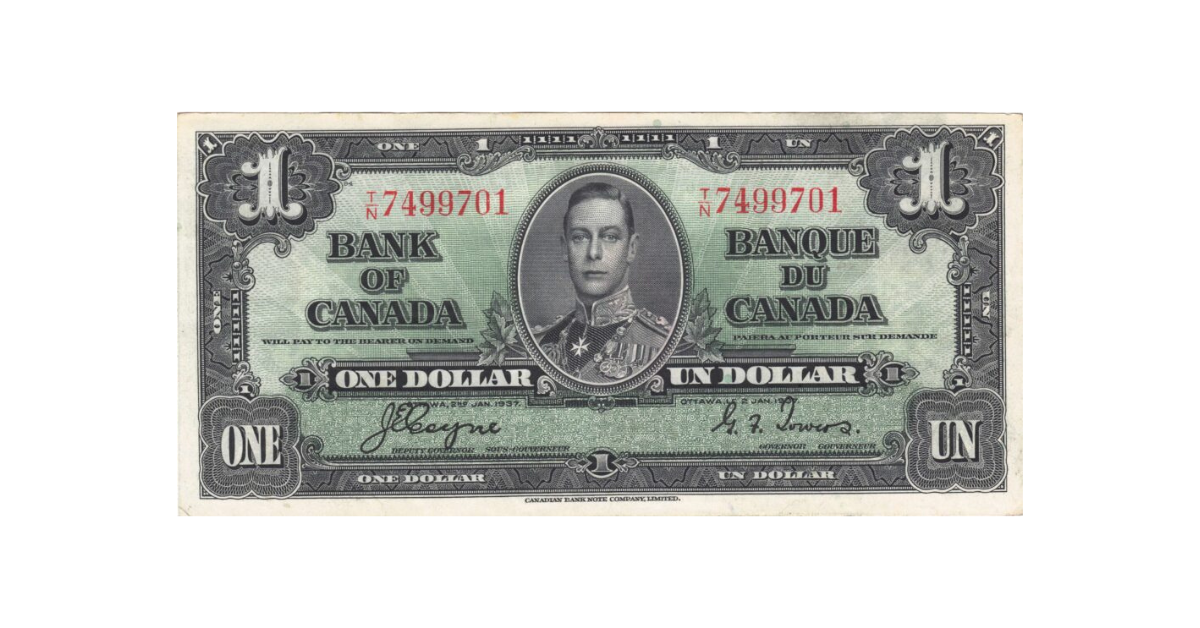
Its About Uncirculated+ grade also makes it especially attractive because it sits close to the higher end of preservation without moving fully into the rarest top-grade category. That balance gives it strong collector appeal. For readers asking about 1 dollar bill Canada worth, this note is a good example of how a historic issue in better condition can command noticeably stronger interest than an average circulated example.
1935F Bank of Canada $1 BC-2 French Bill
The 1935F Bank of Canada $1 BC-2 French Bill stands out for its place in early Bank of Canada history. As a French-language version with the Osborne-Towers signatures, it reflects an important period in Canadian paper money and gives collectors a more specialized issue to consider. Even in Fine 12 condition, it remains meaningful because of its historical importance and its role in the earliest national banknote series.
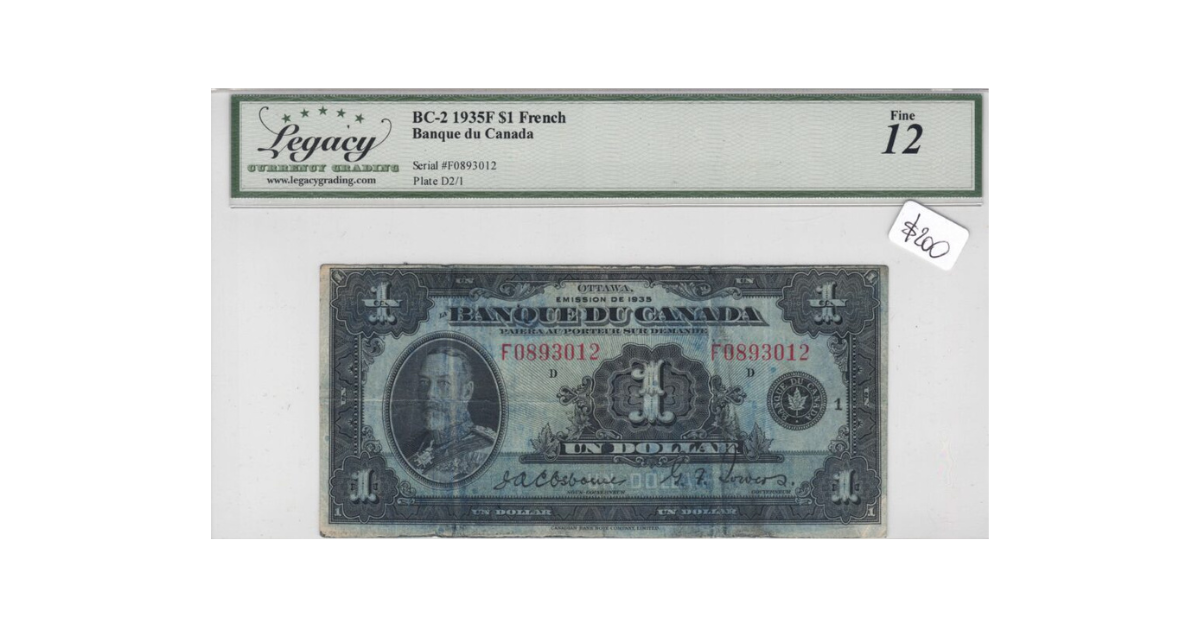
For a blog focused on Canada 1 dollar bill value, this note adds depth because it shows that collector interest is not limited only to the most famous varieties. Language version, catalog type, and early issuance can all matter. Collectors who appreciate historical context often look closely at notes like this because they represent more than a denomination; they reflect a foundational chapter in Canadian banking history.
1937 Bank of Canada $1 BC-21d UNC Banknotes
The 1937 Bank of Canada $1 BC-21d UNC Banknotes show exactly why condition matters so much in the collector market. This is the same historic 1937 design family, but in Uncirculated grade, the note becomes much more desirable because it preserves the sharp corners, strong paper quality, and untouched appearance that collectors always value.
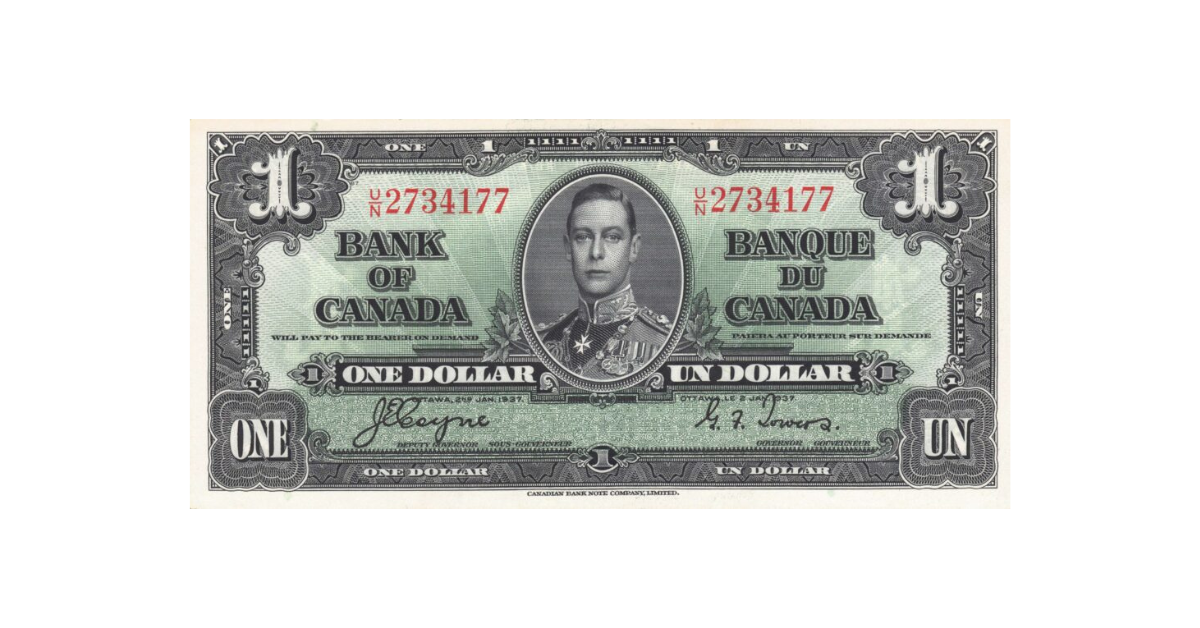
This is the kind of example that helps explain 1 dollar bill Canada worth in a practical way. A common date or recognizable issue can still become significantly more attractive when it survives without folds or handling marks. For serious collectors, an early Bank of Canada note in UNC condition is often much harder to find, which is why these higher-grade examples stand out in the market.
Rare Features That Can Increase Canada 1 Dollar Bill Value
Some Canadian one-dollar bills are worth more because they carry features collectors actively seek. These may include scarcer varieties, stronger grades, less common language versions, better paper originality, or famous design distinctions like the Devil’s Face issue. In many cases, the market premium comes not from the face value but from how difficult the note is to replace in similar quality.
Serial numbers, signatures, and catalog references can also matter depending on the series. Even when two notes look similar to a beginner, experienced collectors often spot subtle details that separate an ordinary example from a more desirable one. That is why anyone researching Canada 1 dollar bill value should inspect the note closely before assuming it is just a standard old bill.
Features worth checking:
- Recognized varieties like Devil’s Face
- Earlier series such as 1935 and 1937 notes
- French-language issues
- Higher grades like AU or UNC
- Strong original paper quality
- Better visual presentation and eye appeal
Is an Old 1 Dollar Bill Canada Note Still Legal Tender?
A common question is whether an old Canadian one-dollar bill is still legal tender or whether it is mainly a collector item now. For most people, the face value is no longer the real story. The collector market usually treats these notes based on rarity, historic appeal, and condition rather than their original spending power.
This matters because a person may think the note is “just one dollar,” while a collector may view it as a desirable historical item. That difference is exactly why old banknotes continue to attract attention. When people search old 1 dollar bill Canada, they are often not asking whether they can spend it. They are really asking whether the note has collector value beyond its printed denomination.
Where to Buy, Sell, or Evaluate an Old Canada 1 Dollar Bill
B&W Coins is a useful place to evaluate, buy, or compare collectible Canadian banknotes because it gives readers access to real examples instead of generic price guesses. A note like the 1937 Bank of Canada $1 BC-21d in Uncirculated condition shows why proper grading, originality, and eye appeal matter so much in paper money.
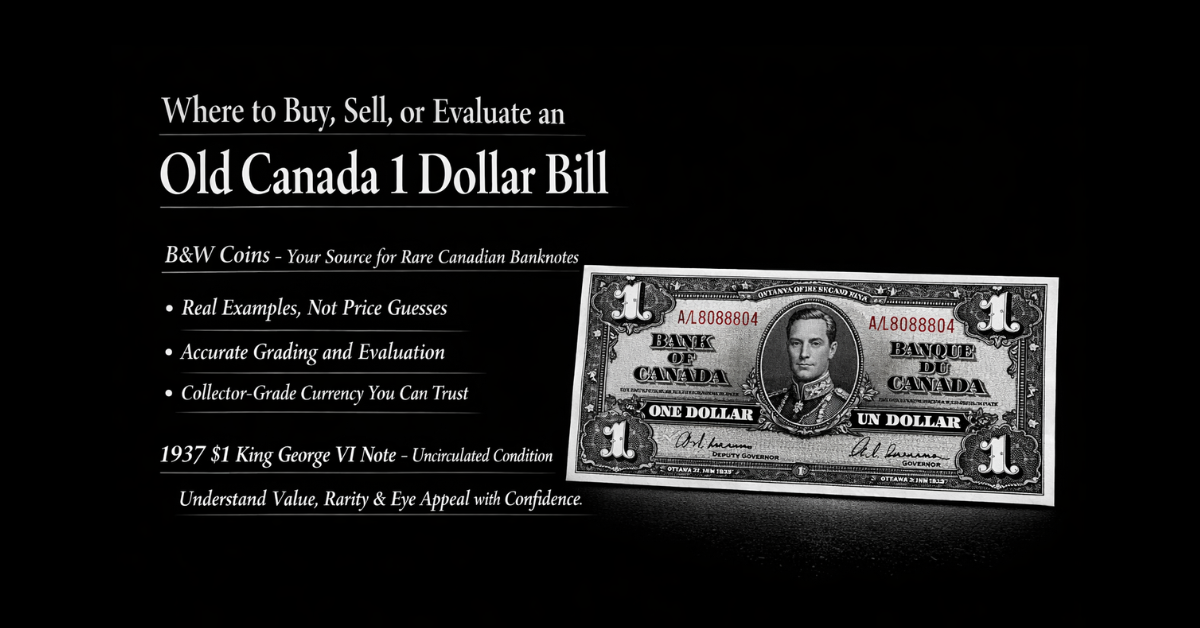
With its crisp paper, sharp corners, bilingual design, and King George VI portrait, this type of note helps collectors understand what separates an ordinary old bill from a premium early Canadian banknote. For anyone researching old Canada 1 dollar bill value, seeing authentic collector-grade pieces at B&W Coins makes it easier to judge condition, rarity, and overall market appeal more confidently.
Final Thoughts on Canada 1 Dollar Bill Value
The true Canada 1 dollar bill value of any old note depends on several factors working together. Series, grade, language version, historical significance, and collector demand all influence how much a note may be worth today. Some examples are affordable entry-level collectibles, while others stand out because they are scarcer, better preserved, or more iconic in Canadian currency history.
If you are researching 1 dollar bill Canada worth, the smartest approach is to begin with identification, then move to condition and rarity. That method is much more reliable than guessing based on age alone. Whether you own a 1935 issue, a 1937 note, or a 1954 Devil’s Face example, understanding the details behind the note is what turns a simple old bill into a meaningful collector item.
Quick takeaways:
- Age alone does not determine value.
- Conditions can change collector interest significantly.
- Historic varieties and stronger grades usually attract more attention.
FAQs About Canada 1 Dollar Bill Value
1. How much is a Canada 1 dollar bill worth today?
The value depends on the year, series, rarity, signatures, and condition. A common circulated note may carry modest value, while scarcer or higher-grade examples can be worth much more to collectors.
2. Are old 1 dollar bills from Canada worth anything?
Yes, many old Canadian one-dollar bills have collector value. Some are common keepsakes, while others are more desirable because of design type, historical significance, better condition, or rarity.
3. What is the most famous old 1 dollar bill Canada collectors look for?
One of the best-known examples is the 1954 Devil’s Face note. It is popular because of its unusual portrait detail, strong recognition, and long-standing appeal in Canadian paper money collecting.
4. Does condition really affect 1 dollar bill Canada worth?
Yes, condition matters a lot. A folded or worn note will usually be worth less than a crisp, original example from the same series, especially when collectors are seeking higher-grade pieces.
5. Where can I sell an old Canada 1 dollar bill?
You can sell through a trusted coin and banknote dealer, a specialist collector platform, or a reputable marketplace. A proper evaluation can help you understand whether your note is common or truly collectible.