

Some coins feel ordinary until you hold them in your hand. The 1967 Canadian silver dollar is not one of them. It stands out immediately because of its size, silver content, and one-year Centennial design that collectors still recognize decades later. Many people first discover this coin inside a family collection, inherited coin box, or small silver group and ask the same question:
Is my 1967 Canadian silver dollar rare or just worth silver value?
The answer depends on condition, originality, and collector demand. While most examples are not considered rare, the coin remains one of the most popular Canadian silver dollars ever issued and continues to attract steady interest across Canada. If you are trying to understand what your coin is worth today, this guide explains exactly what collectors look for and how value is determined.
What Is the 1967 Canadian Silver Dollar?
The 1967 Canadian silver dollar was issued to celebrate Canada’s Centennial year. Unlike earlier Voyageur dollars that showed the canoe design, this coin features a completely different reverse, a flying wild goose created specifically for the anniversary issue.
Because the design was used for only one year, collectors often treat it as a special commemorative dollar rather than a standard circulation piece. It represents a turning point in modern Canadian coin design, when the Royal Canadian Mint introduced symbolic wildlife themes tied directly to national identity.
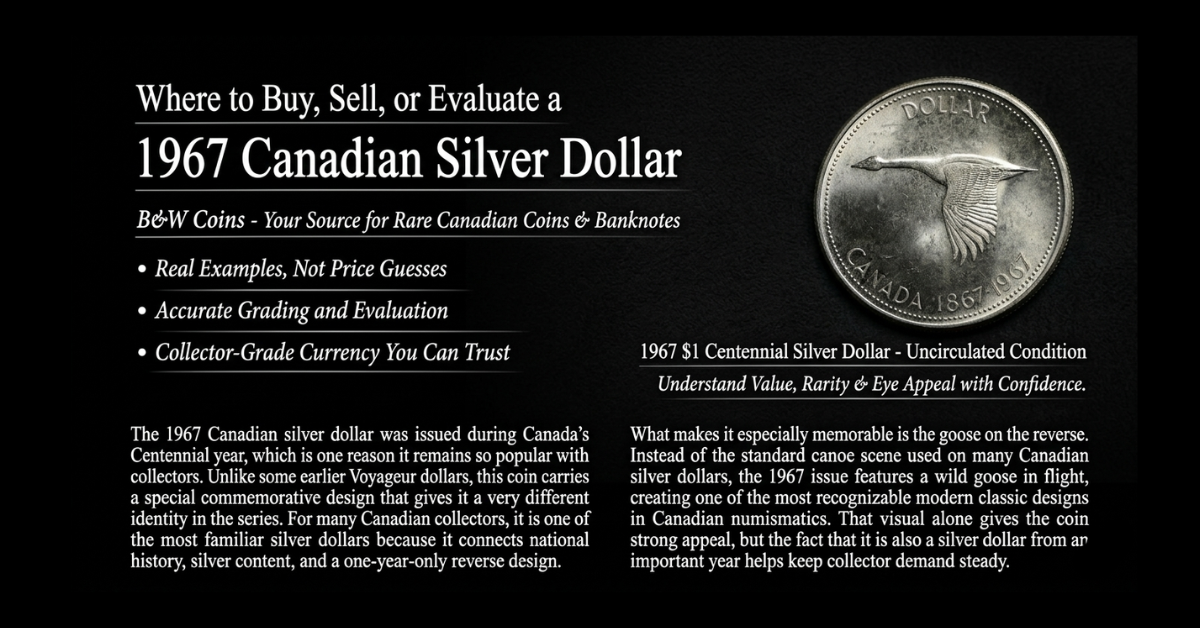
The coin contains 80% silver, which means even worn examples carry intrinsic bullion value. At the same time, the Centennial theme and distinctive artwork give it long-term appeal beyond metal content alone. Many collectors consider it one of the easiest entry points into pre-1968 Canadian silver coin collecting.
For many collectors, the 1967 issue is one of the easiest Canadian silver dollars to recognize instantly.
How Much Is a 1967 Canadian Silver Dollar Worth?
There is no single fixed value for every 1967 Canadian silver dollar. Two coins from the same year can sell for very different amounts depending on their preservation and eye appeal.
Most circulated examples are worth more than face value because of their silver content. However, stronger examples with better surfaces and original luster often bring additional collector interest. Coins stored carefully for decades sometimes appear in surprisingly sharp condition and can command noticeably stronger premiums than expected.
Typical value factors include:
- current silver prices
- amount of visible wear
- presence of scratches or marks
- original mint luster
- surface cleaning or damage
- overall visual appeal
Collectors also watch auction results and dealer inventories when estimating realistic market value. Demand for Centennial coinage remains steady in Canada, which helps support pricing stability even when bullion markets fluctuate.
Coins that remain bright and untouched generally attract stronger demand than pieces that show heavy circulation or cleaning. This is why experienced collectors always evaluate conditions before estimating value.
Featured Product: 1967 Canadian Diving Goose
A real market example helps readers understand value more clearly than a general guide alone. This 1967 Canadian Diving Goose Silver Dollar available at B&W Coins shows the kind of Centennial issue collectors look for when they want a coin with strong eye appeal, silver value, and lasting collector interest.
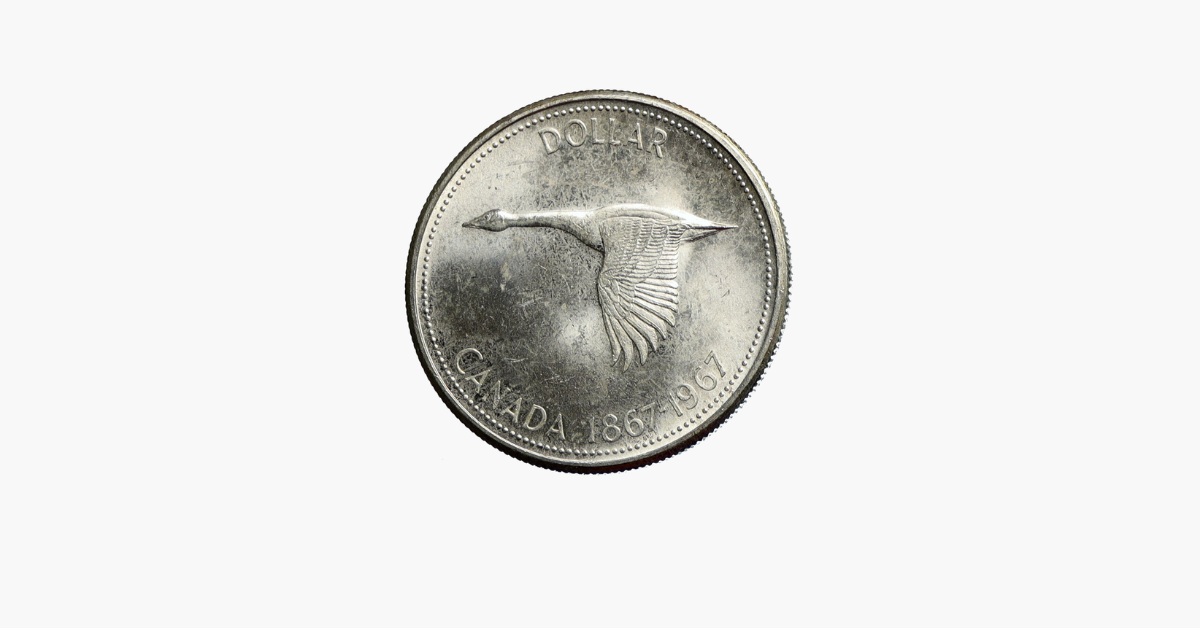
Because condition plays such a major role in pricing, comparing your coin to a professionally listed example can make it easier to judge desirability, surfaces, and overall presentation. For collectors in Toronto and across Canada, this featured piece is a strong example of why the 1967 Diving Goose dollar remains one of the most recognized Canadian silver dollars ever issued.
How to Identify a 1967 Canadian Silver Dollar
Identifying the 1967 Canadian silver dollar is straightforward once you know what to check. The coin is large, solid, and visually different from earlier Canadian dollar issues.
Start by confirming the date on the reverse. Then look for the well-known flying goose design that replaces the traditional canoe scene used on earlier dollars. This reverse alone distinguishes the Centennial dollar from nearly every other Canadian silver dollar of the decade.
The obverse carries the portrait of Queen Elizabeth II used on Canadian coinage during the period, along with the standard legends expected on a one-dollar issue. The portrait style helps confirm the correct era and ensures the coin matches official Centennial production characteristics.
Because of its silver composition and Centennial artwork, the coin has a distinctive appearance that makes it easy to recognize even for new collectors. Its diameter, thickness, and traditional silver “ring” sound when gently handled also help confirm authenticity for experienced buyers.
Key Design Features to Look For
Collectors usually confirm the coin using a few simple visual checkpoints:
- the date 1967 on the reverse
- the flying wild goose design
- Queen Elizabeth II portrait on the obverse
- large traditional Canadian silver dollar size
- solid silver weight and feel
Once these features match, the next step is evaluating surface condition. Even correctly identified coins can vary widely in collector value depending on preservation. Small details like feather sharpness on the goose or clarity in lettering often signal whether a coin spent years in circulation or remained stored in albums or original packaging.
Look carefully for:
- remaining mint luster
- visible scratches
- signs of cleaning
- edge damage
- dull or polished surfaces
Small differences in surface quality often explain large differences in price.
Why It Is Called the Diving Goose Dollar
The nickname “Diving Goose dollar” comes directly from the reverse artwork. The goose appears in mid-flight, angled downward in a dynamic position that collectors immediately recognize.
Over time, the nickname became just as common as the official description. Many collectors actually search for this coin using the term 1967 Diving Goose dollar instead of its full name. Because of this, the nickname now functions almost like a secondary title in Canadian numismatic references and dealer listings.
The design itself reflects Canada’s wildlife heritage and Centennial symbolism, which adds historical meaning beyond its silver content. Even collectors who focus mainly on bullion issues often keep at least one example because of its artistic reputation. Because both names refer to the same issue, dealers and collectors use them interchangeably across Canada.
What Makes a 1967 Canadian Silver Dollar Valuable?
Silver content is the starting point for value, but it is not the only factor that matters.
Every 1967 Canadian silver dollar contains 80% silver, which gives even worn pieces a baseline bullion price. However, collector interest increases when condition improves. Coins that retain original mint surfaces without polishing or cleaning are consistently preferred in the Canadian collector market.
Coins with strong original surfaces and minimal wear typically attract more attention than heavily circulated examples. Many collectors specifically search for Centennial dollars with natural toning, since untouched surfaces often indicate careful long-term storage.
Collectors often pay closer attention to:
- brightness and luster
- absence of cleaning
- sharp feather detail on the goose
- minimal contact marks
- balanced natural toning
Although the coin is not considered rare in lower grades, attractive higher-quality examples remain popular with collectors building Centennial sets or Canadian silver dollar collections.
1967 Canadian Silver Dollar Value by Condition
Condition plays the biggest role in determining market value.
Circulated coins are the most common and usually trade close to their silver content unless they show unusually strong detail or eye appeal. Many examples available today spent years in everyday use before being saved as silver coins, which explains why heavily worn pieces appear more frequently in the market.
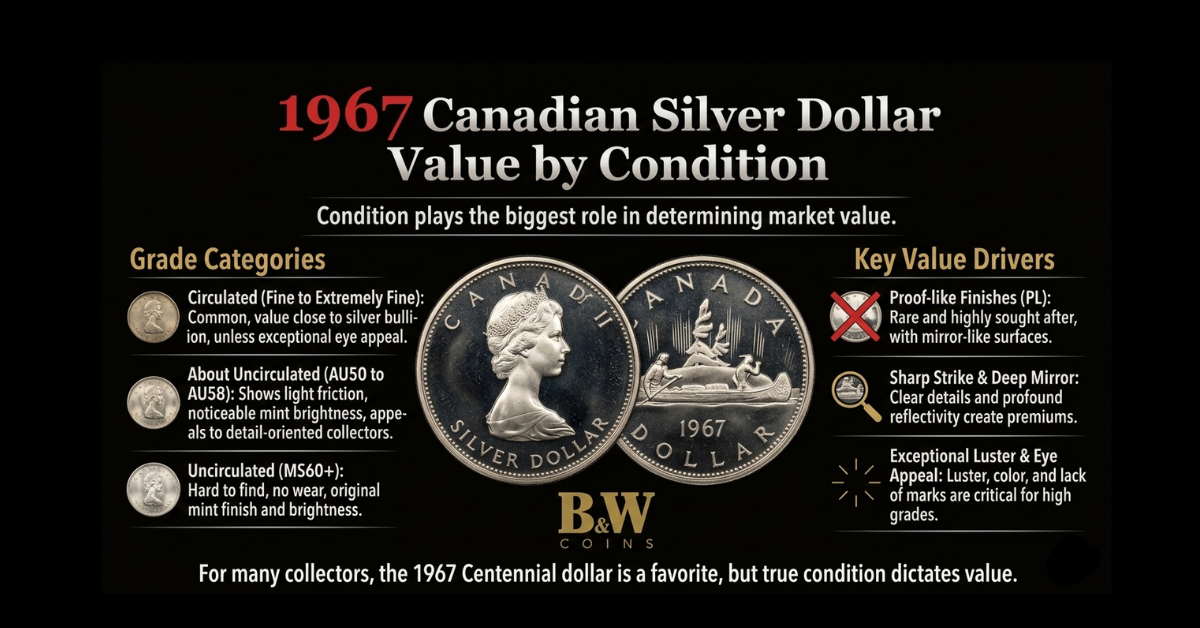
Uncirculated examples retain more of their original surfaces and often appeal to collectors looking for sharper coins without paying premium prices. These coins typically show only slight friction on high points and still display noticeable mint brightness.
Uncirculated pieces stand out clearly because they show no wear from circulation and preserve their original mint finish. These examples are harder to find and typically generate stronger interest. Coins with exceptional luster and minimal marks are especially desirable when collectors are assembling higher-quality Canadian dollar sets.
Where to Buy or Sell a 1967 Canadian Silver Dollar in Canada
If you are planning to sell a 1967 Canadian silver dollar, the most important step is getting an accurate evaluation based on condition rather than relying only on silver value. Many owners assume every Centennial dollar trades at the same price, but surface quality can make a meaningful difference. A professional assessment helps determine whether the coin belongs in a bullion category or qualifies as a collectible example with stronger demand.
Working with a professional coin dealer helps ensure the coin is assessed properly and compared with real collector demand instead of generic online estimates. Established Canadian dealers also track market activity across auctions, private sales, and collector requests.
For buyers, purchasing from a recognized Canadian dealer provides confidence that the coin has been correctly identified and evaluated. Seeing real examples in person or through a trusted inventory listing also makes it easier to judge condition differences between pieces. Collectors across Toronto and the Greater Toronto Area often choose established specialists like B&W Coins when comparing Centennial silver dollars because accurate grading and transparent pricing matter when building a serious collection.
Conclusion
The 1967 Canadian silver dollar remains one of the most recognizable Centennial coins ever issued by the Royal Canadian Mint. Its silver content, one-year goose design, and strong collector familiarity continue to support steady interest across Canada. While many examples trade close to bullion value, condition can change that picture quickly. Coins with original luster and minimal wear often attract stronger attention from collectors than heavily circulated pieces.
If you are trying to determine what your 1967 Canadian silver dollar is worth, the most reliable approach is to evaluate the actual coin in hand rather than relying on a general estimate. A knowledgeable dealer can help clarify whether your example is simply a silver dollar or a more desirable collectible piece within the Centennial series.
