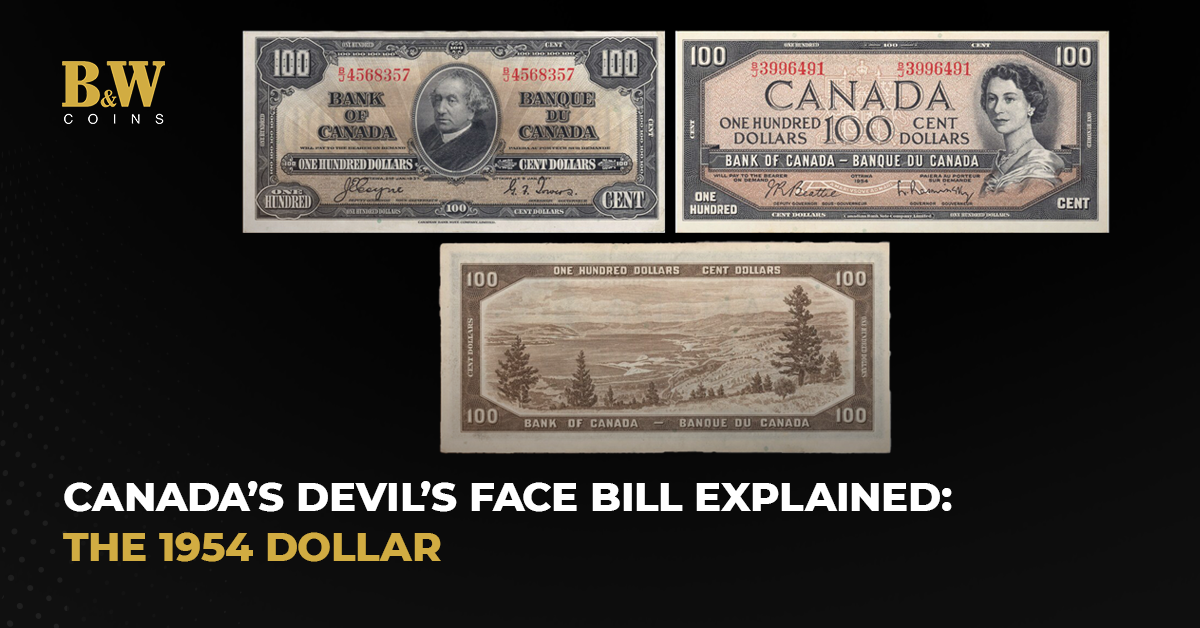
The 1954 Canadian Two Dollar Bill value has become a key topic among collectors due to the famous Devil’s Face design and its short circulation period. The Devil’s Face bill of 1954 is one of the most interesting episodes in the history of Canadian money. It started as an accidental carving but later became a national point of discussion. With time, this silent design aberration evolved to become one of the most familiar and popularized examples of obsolete Canadian money.
To the collector of old Canadian bills, the Devil Face note is a rarity that was made by chance and not design. The limited production period, response by the population and quick redesign makes it a historical story that boosts its demand. It continues to form the basis of serious Canadian paper money collections decades later.
What Is the Canada Devil’s Face Bill?
The Canada Devil Face bill denotes early print versions of the 1954 Bank of Canada notes whose portrait of Queen Elizabeth II seemed to contain a shadow image of a devil in her hair. The perceived image, though subtle, actually attracted attention soon after the notes had been circulated, and today these early 1954 issues are actively sought by collectors exploring verified examples available through B&W Coins.
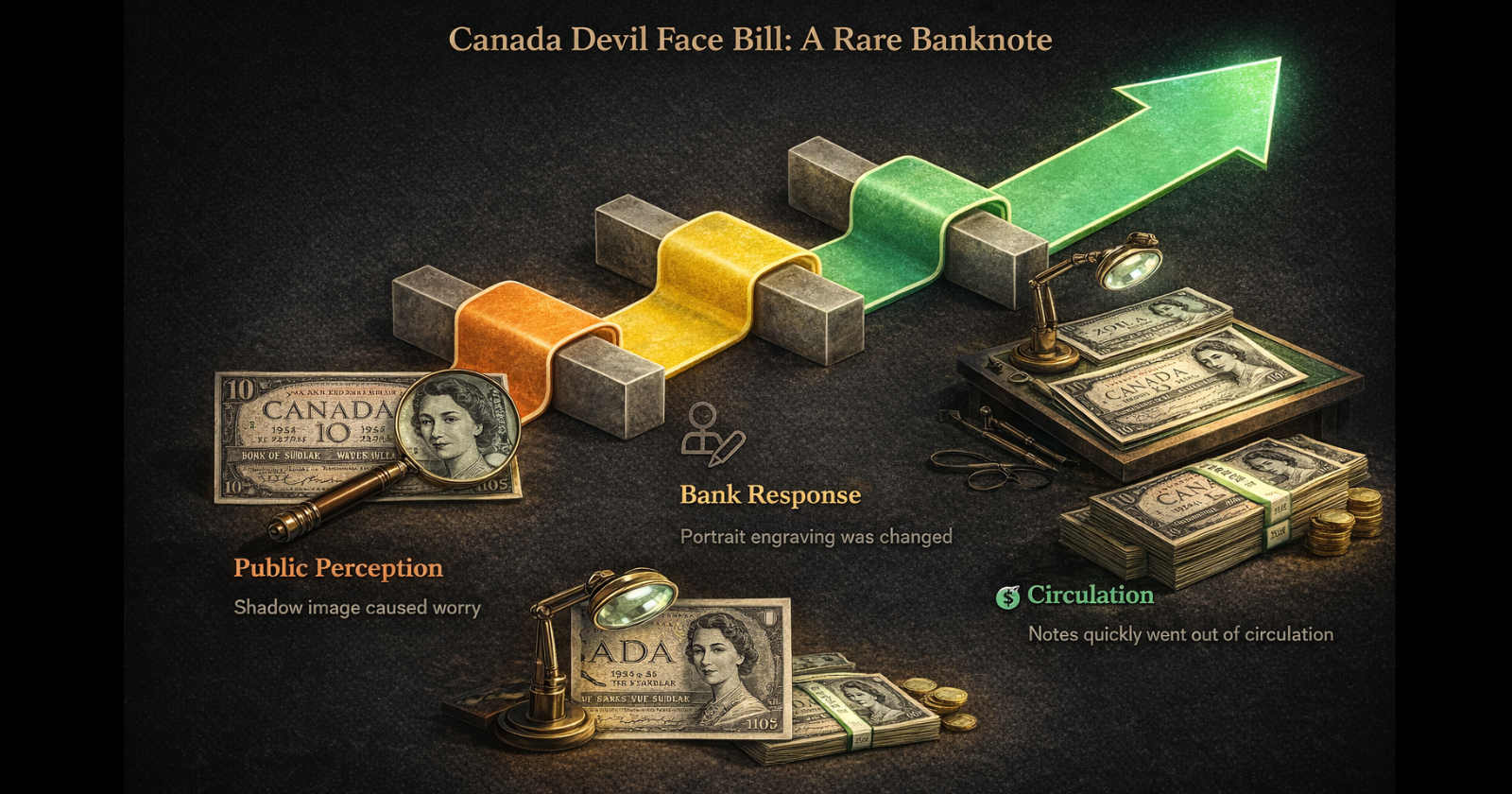
There was an increasing worry and the portrait engraving was changed again in the same year by the Bank of Canada. The notes that were previously printed prior to this correction were called the Devil Face variety. These initial printings soon came out of circulation, they unwittingly have become one of the most recognizable rare types of banknotes in Canada.
The 1954 Canada 1 Dollar Bill and the Devil’s Face Controversy
Controversy regarding the 1954 Canada 1 dollar bill received increasing dynamics due to the discourse and coverage by the media. It was felt by some Canadians that the impression generated by the image had symbolism, even though the similarity was only subjective and unintentional by the engravers.
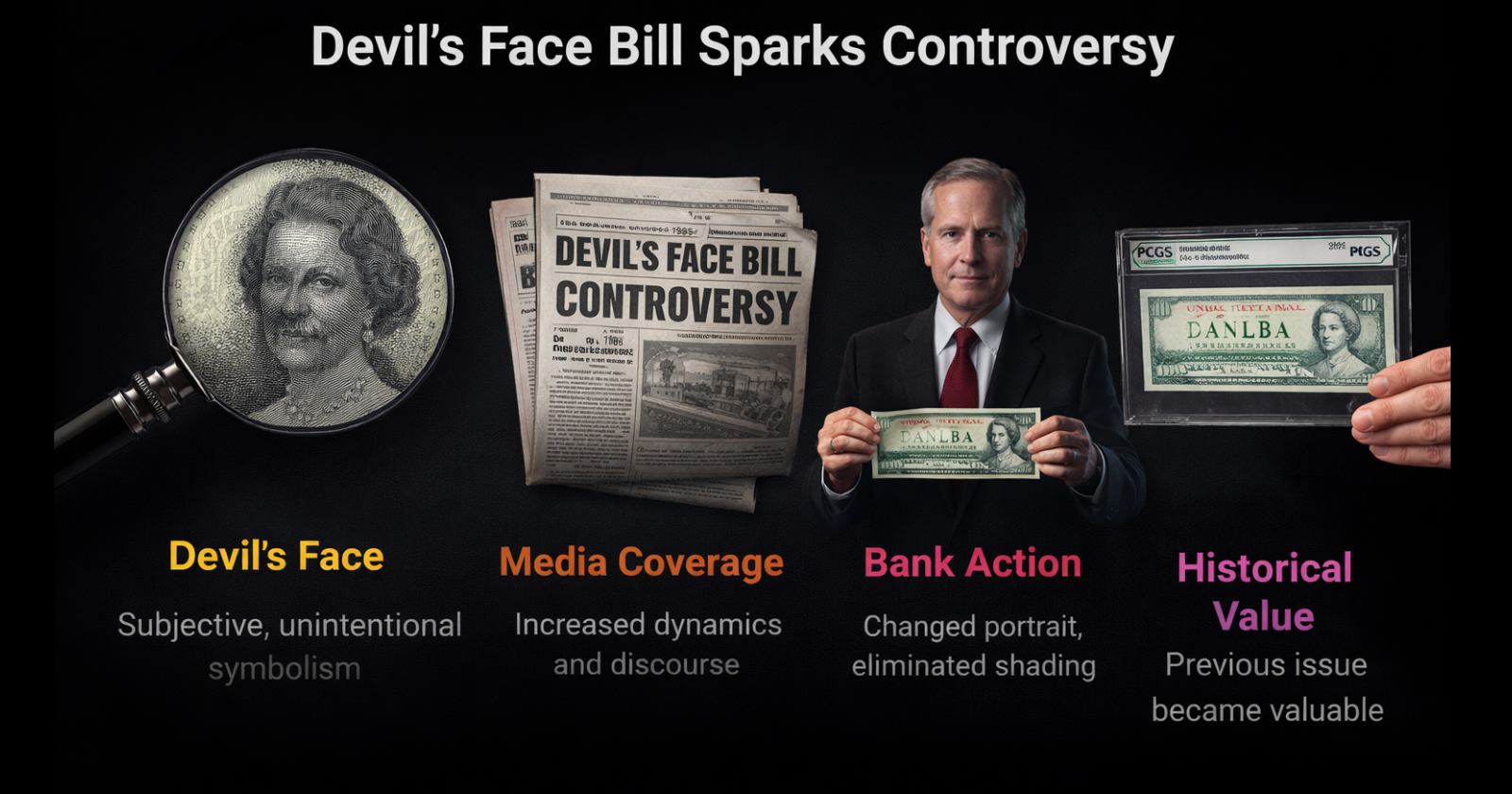
To avert additional controversy the Bank of Canada changed the portrait and eliminated the shading all the way. This ruling created two visually different versions of the same note and the previous issue of the Devil’s Face became a very valuable piece of Canadian currency history.
Was There a Devil’s Face on the 1000 Dollar Bill in Canada?
Yes, it was the Devil Face effect that was used in numerous denominations in the 1954 series, such in the 1,000 dollar bill. Yet, the impact is much less conspicuous on higher denominations and necessitates usually skilled interpretation to be detected with certainty.
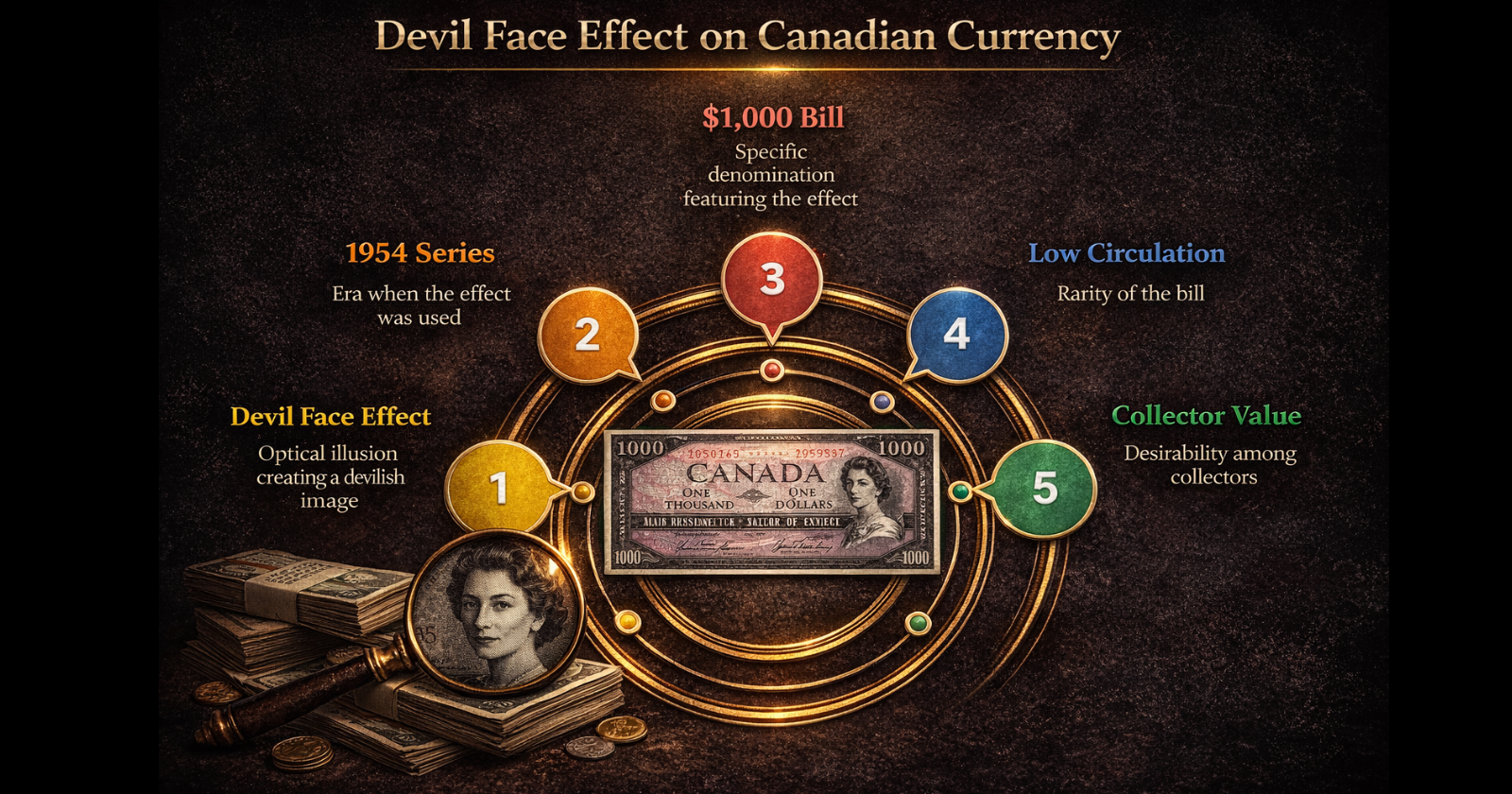
Due to the very low circulation of the $1,000 bill, the examples of Confirmed Devil faces are extremely rare nowadays. The most valuable representatives of the vintage Canadian paper money are authenticated notes of this denomination and are sought after by advanced collectors.
1954 Canadian Two Dollar Bill Value Today
The value of a 1954 Canada 1 dollar Devil’s Face bill varies significantly based on condition, serial number, and overall visual appeal. Circulated examples typically sell for moderate premiums, while uncirculated notes can reach several hundred dollars or more.
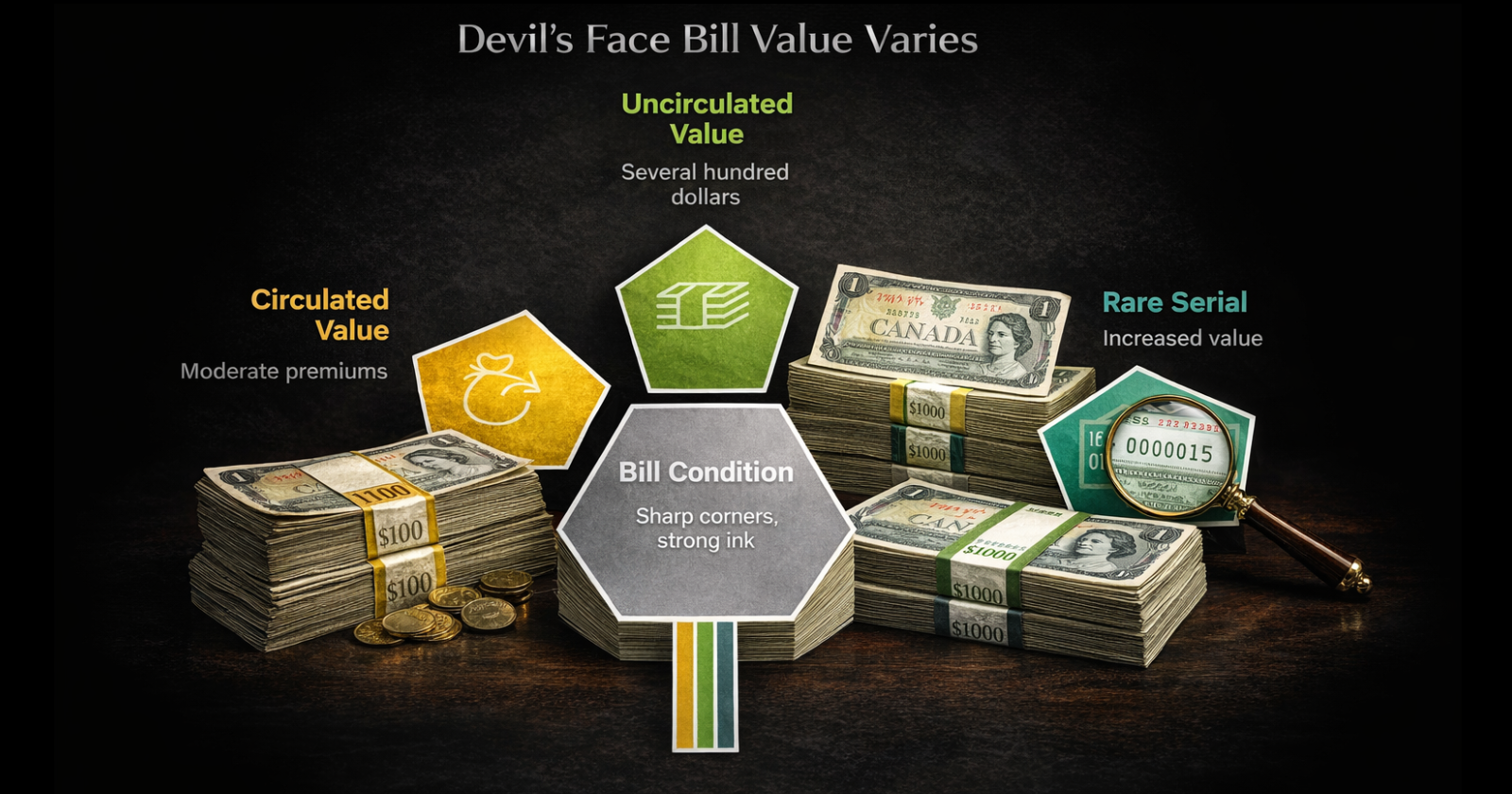
Bills with sharp corners, original paper quality, and strong ink contrast command the highest prices. Replacement notes or rare serial number patterns can further increase value, making professional appraisal essential when determining current market worth.
Authentic Devil’s Face Era Canadian Banknotes in Our Collection
The connoisseurs of the real Devil? Face era banknotes might look through the thoughtfully selected collection that can be offered by B&W Coins. All the notes are verified and checked on the condition of the note and the collector gets a historically accurate and investment-worthy piece.
These are some examples of prominent denominations in the 1954 series with a different collector value depending on rarity, condition, and historical value.
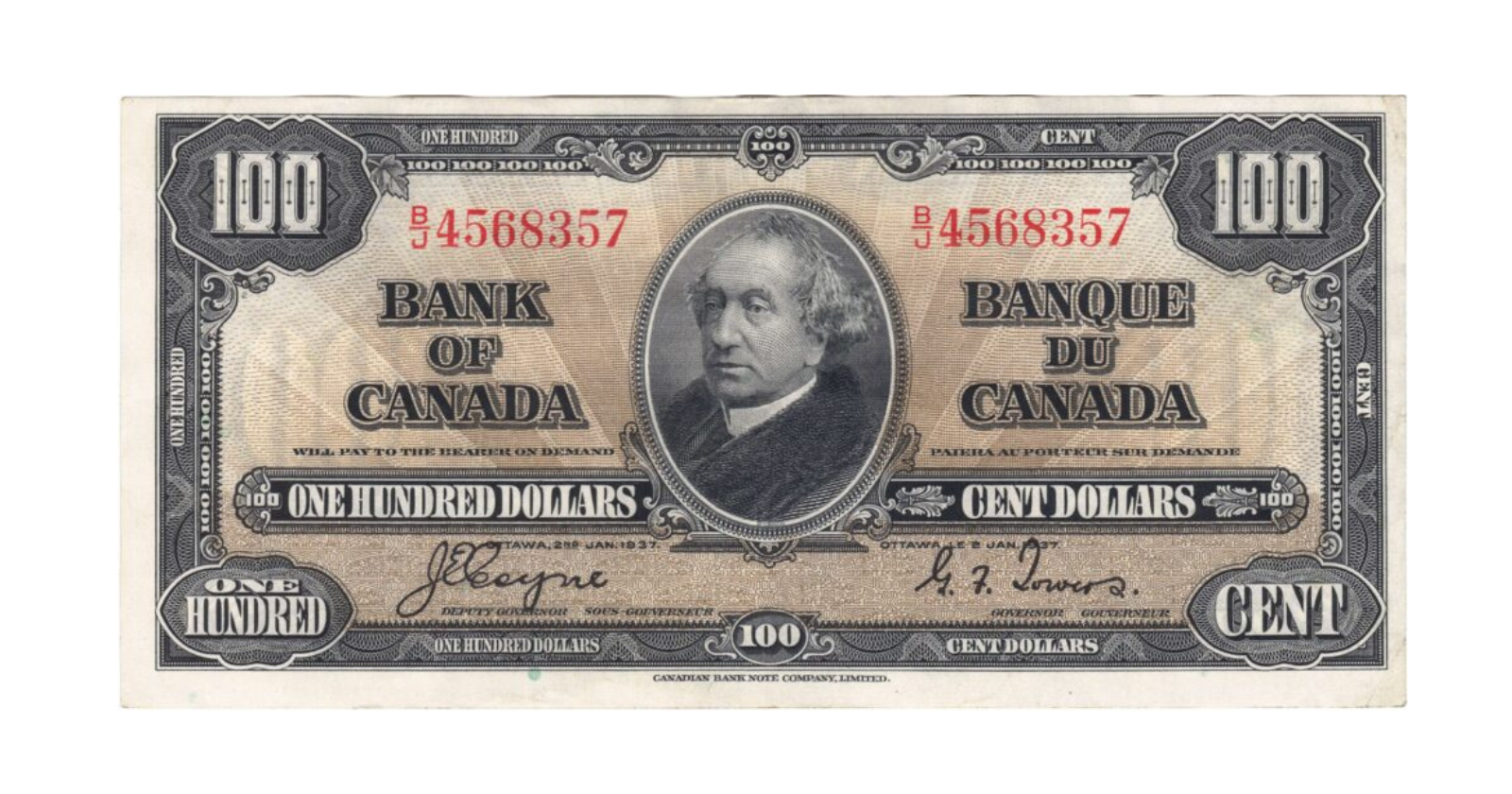
1954 Bank of Canada $100 BC-43c Uncirculated Banknote
The bill is of the best quality of the Devil’s Face period bills because it has very low circulation, and is quite attractive in its appearance. Uncirculated are particularly rare and this is a good deal to premium collectors of Canadian banknotes.
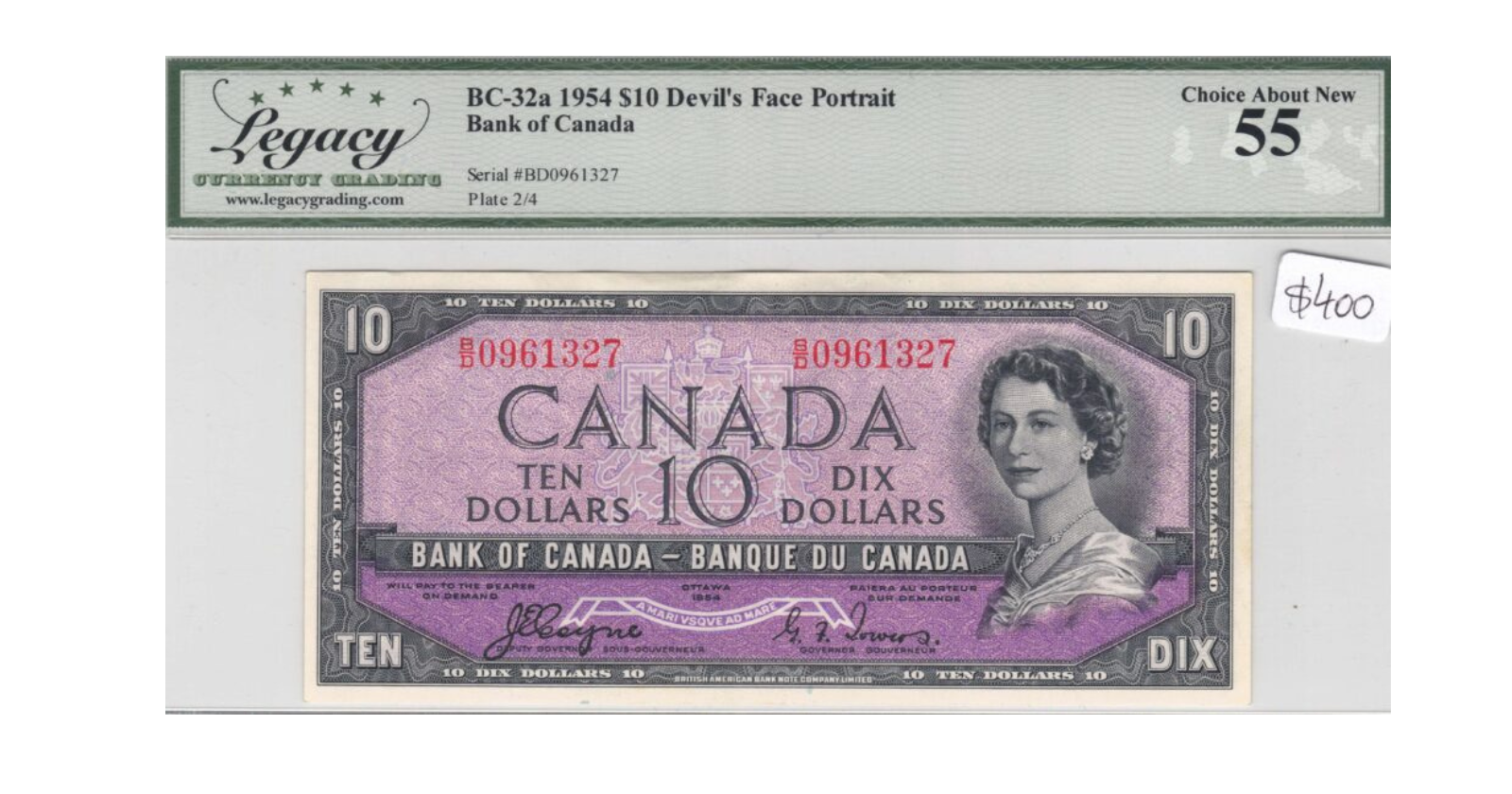
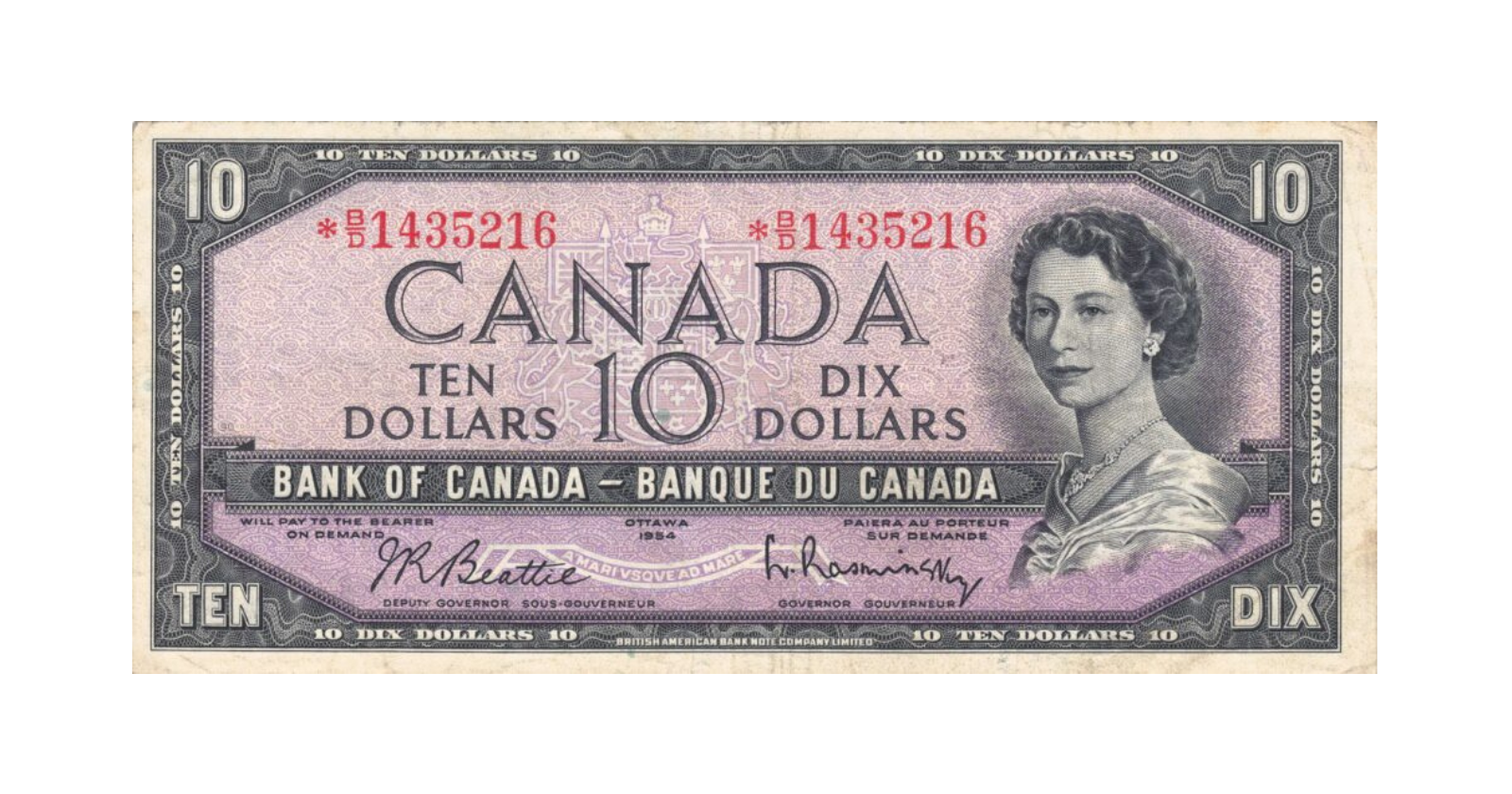
1954 Bank of Canada $10 BC-32a Devil’s Face Bill
One of the most well-known issues in the series is the BC-32a $10 note of the Devil face. Its balanced denomination and definitive amount of portrait make it an easy way out to the collectors wishing to possess a classic Devil’s Face variety.
1954 Bank of Canada $10 BC-40ba F Banknote
This late type of $10 version provides the collector with a chance to compare small differences in engraving within the collection. It has an attractive quality in that the higher the grade, the more value the example will value over time.
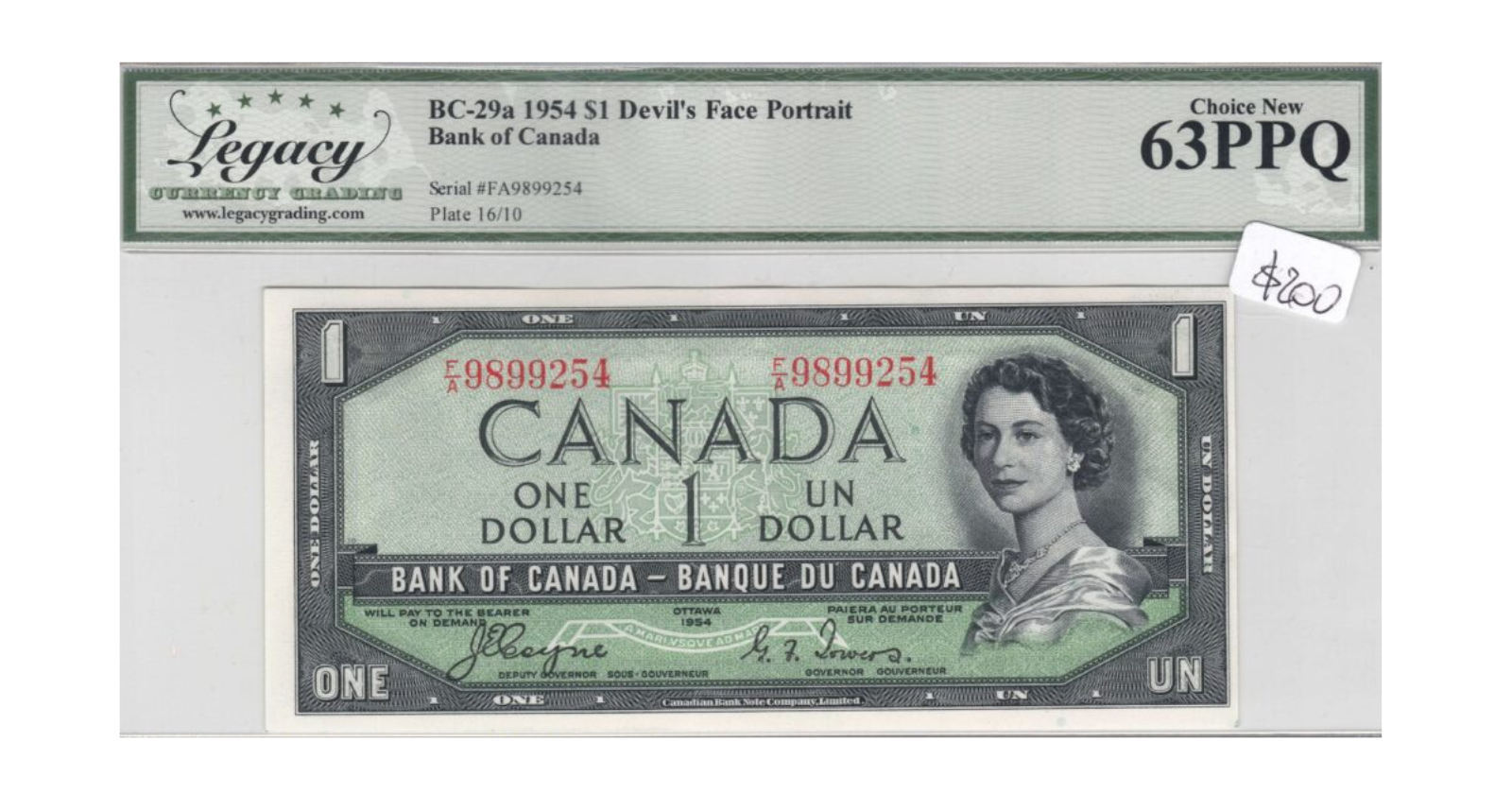
1954 Bank of Canada $1 Devil’s Face BC-29a Banknote
The most recognizable of the series is the one-dollar Devil Face. The lack of early production, together with its wide-received popularity, makes it an iconic item in the collection of anyone interested in the history of Canadian currency.
Why the Devil’s Face Bill Is Still Popular With Collectors
The Devil face bill is popular as it has been an exception to a rule as far as popular opinion has been directly used to shape the design of currency. This peculiar beginning has provided the note with a narrative quality that is unusual with the Canadian banknotes.
Its limited supply is also an attraction to the collectors. Devil has his face notes that survived are few, as the design was fixed in a haste. With the constant rise in the demand of rare Canadian banknotes, there is always a high demand for authenticated specimens.
Final Thoughts on the Canada Devil’s Face Bill
One of the most representative examples of the discontinued Canadian currency is the Canada Devil Face bill. Its controversial nature, brief production time and historical significance provide it with long-term popularity among both collectors and historians.
To know its value, it is important to evaluate its condition, denomination, and authenticity. Some of them are still available, but higher grade notes are also an important numismatic property that is increasing in value as supply diminishes.
At B&W Coins we deal with authenticating, valuing and selling authentic Devil Face era Canadian banknotes. In the compilation of a collection or the appraisal of inherited paper money we are experienced to provide a clear, trusted, and right market understanding.