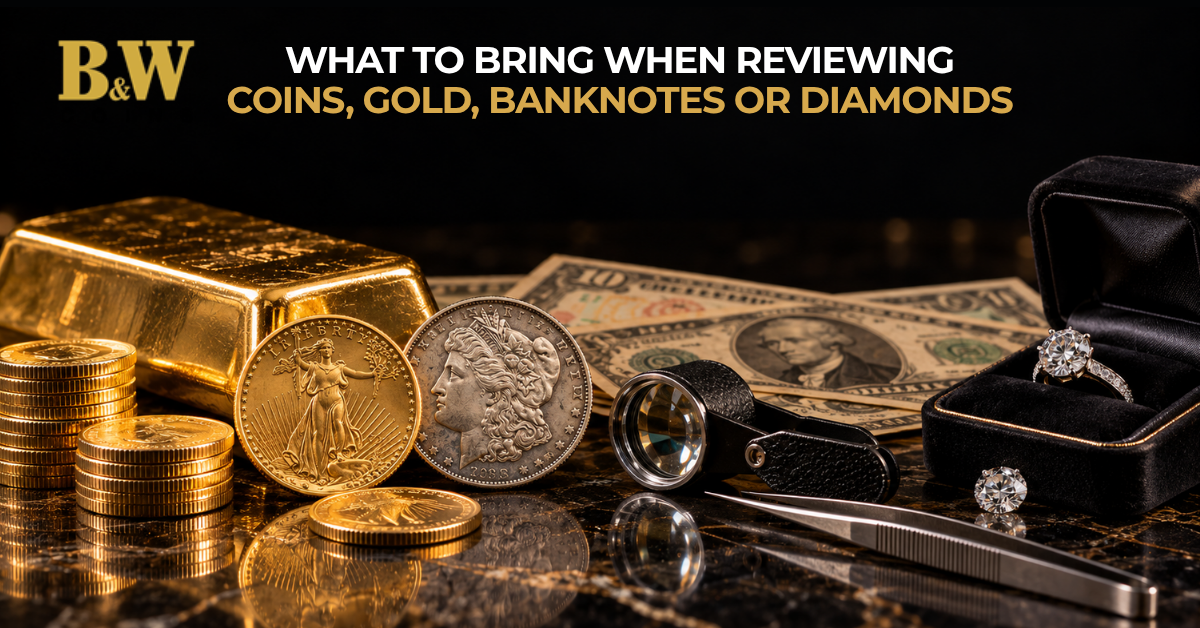
Before bringing in coins, gold, banknotes, diamonds, or a mixed collection, a little preparation can make the review much clearer. You do not need to know the value first. The most helpful step is bringing the right items, papers, holders, and related pieces together.
Many customers bring mixed items in the same box: coins, old bills, jewellery, receipts, and small envelopes. That is normal, and it is often better than separating everything too early. Some items may look ordinary but still help explain the collection. A receipt, holder, certificate, old sleeve, or handwritten note can sometimes give useful context.
The best thing you can do is simple: keep everything together, do not clean or change anything, and bring whatever comes with the items. Here we explain what to bring, what to leave alone, and how to prepare before visiting B&W Coins for a clearer review.
Why Preparation Matters Before a Review
A review is easier when the items are kept together, organized, and unchanged. That does not mean everything needs to be perfect. Most people bring items exactly as they found them: in tins, envelopes, albums, boxes, safes, drawers, or old family folders.
That is completely fine. The goal is not to impress anyone. The goal is to give the dealer enough information to look at the items properly.
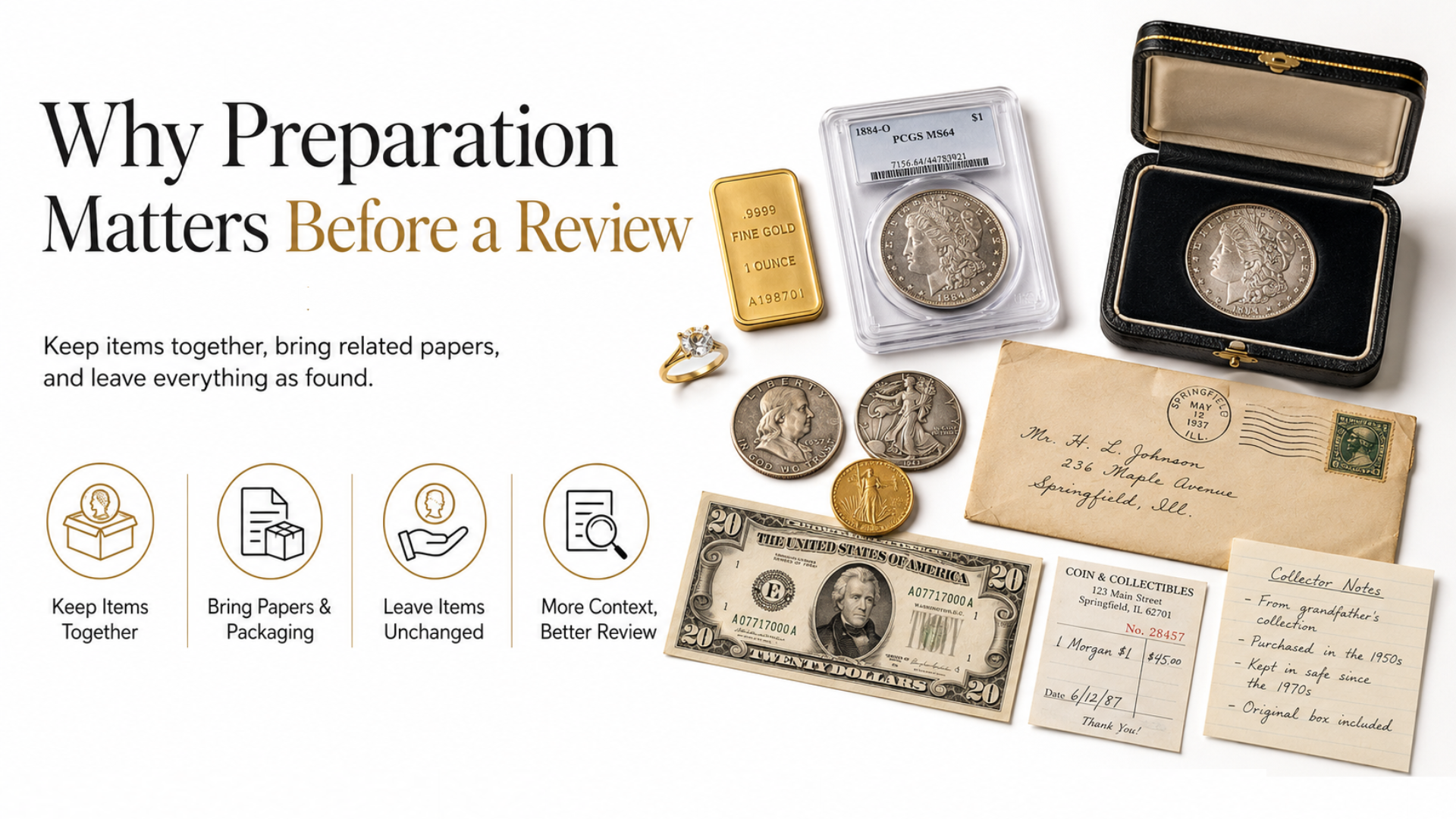
Coins, banknotes, bullion, and diamonds are not always reviewed from the item alone. Packaging, papers, labels, and related pieces can help explain what something is.
For example, an old receipt may show where a coin was purchased. A box may connect a coin to a set. A grading holder may show a third-party opinion on condition. Even a handwritten list from the original collector can help.
You do not need to know all the answers before you arrive. A good review helps you understand which details matter and which details may not.
This kind of question comes up often: someone inherits a collection, sees coins, gold, silver, certificates, or old holders, and does not know what should be reviewed first.
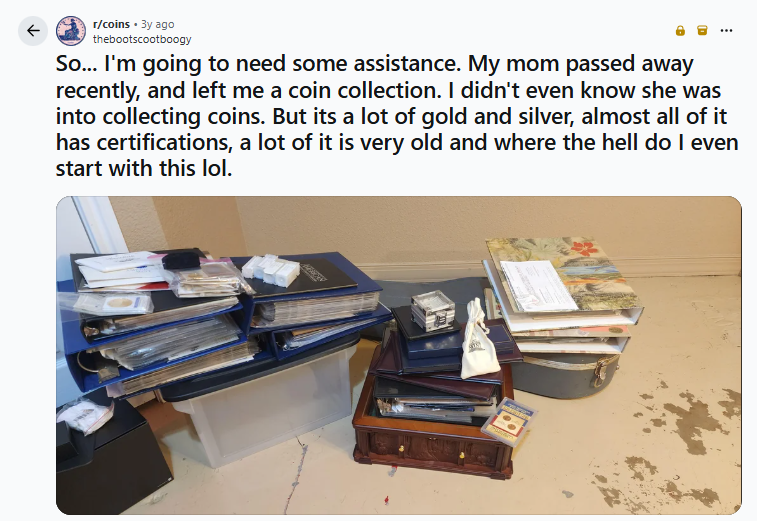
Key insight: You do not need to know what everything is before a review. It is often more helpful to bring items together, untouched, with any packaging or paperwork you still have.
Bring the Whole Collection, Not Just the Best Pieces
One common mistake is bringing only the items that look expensive. That can leave out important context. If the items came from the same family, drawer, safe, estate, or collection, bring the full group when possible.
A coin that looks ordinary may help identify a set. A small envelope may show how the collection was sorted. A matching note may explain why another piece was saved. This matters more than many people realize.
Collections often have patterns:
- Same country
- Same year range
- Same metal type
- Same collector interest
- Same purchase source
- Same family history
When pieces are separated too early, that pattern can be harder to see.
You do not need to decide what is “good” before the review. Bring the group and let the review separate what matters from what does not.
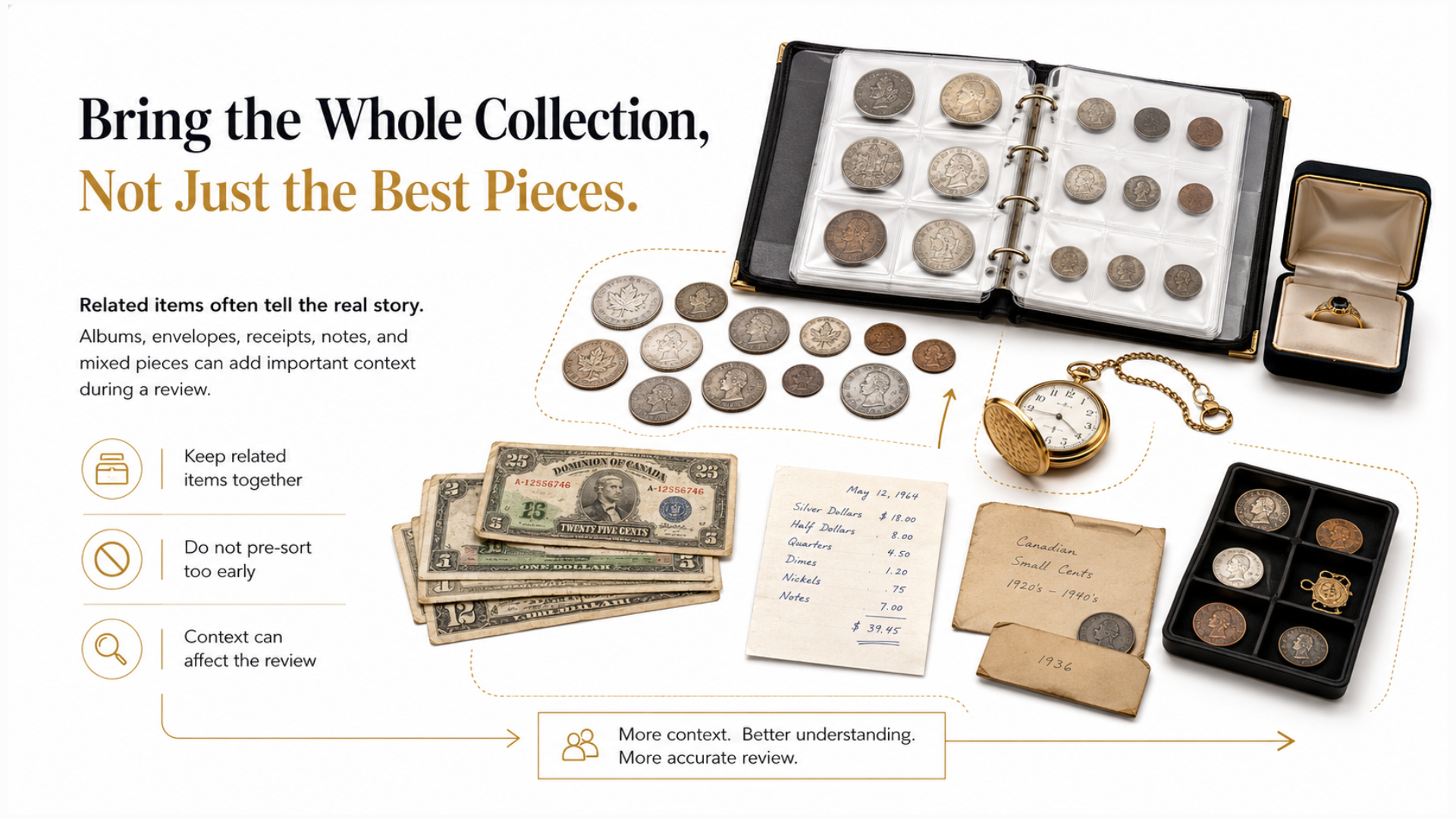
This is especially helpful for estate items. Many estate collections include coins, banknotes, jewellery, gold, silver, watches, receipts, and small notes in the same box. Some pieces may be common. Others may need closer attention.
The safest approach is simple: bring related items together first. You can always sort later.
What to Bring for a Proper Review
Different items need different details. Coins, bullion, banknotes, and diamonds are not reviewed the same way. Bringing the right supporting pieces can help the review start with better information. This does not mean you need every document.
Bring what you have. Leave the items as they are.
i. Coins and Coin Collections
For coins, bring the full group whenever possible. This includes loose coins, albums, tubes, capsules, old holders, graded slabs, Mint packaging, boxes, certificates, receipts, and any collector notes.
Do not worry if the coins are mixed. Many people bring coins in jars, tins, bags, envelopes, or old albums. A dealer can still review them more clearly when everything stays together.
Coins may be reviewed by:
- Country
- Date
- Mint mark
- Metal content
- Condition
- Grade
- Rarity
- Demand
- Packaging
- Whether they belong to a set
If a coin is already in a holder, capsule, slab, or original box, leave it there. Do not clean it. Do not polish it. Do not remove it from packaging before asking.
Cleaning can leave marks that are hard to undo. Even when a coin looks dirty, that does not always mean it should be cleaned. For coin collections, also bring any written list you find. A list may not be perfect, but it can show how the collector thought about the group.
ii. Gold and Silver Coins or Bars
For gold and silver, bring the items with any packaging or papers you still have. This can include gold coins, silver coins, gold bars, silver bars, assay cards, sealed packaging, tubes, capsules, certificates, receipts, and marked weight or purity details.
Gold and silver items may be reviewed by:
- Weight
- Purity
- Current market price
- Brand or mint
- Condition
- Packaging
- Whether it is bullion or collectible
- Buyer demand
A gold bar in sealed packaging should usually stay sealed before review.
The same applies to assay cards. Opening sealed packaging too early can remove useful information or reduce buyer confidence. If the packaging is original, bring it as it is.
Gold and silver coins can also carry more than metal value. Some pieces are mostly bullion. Others may have collector interest because of date, condition, design, mintage, or packaging.
That is why it helps to bring everything together.
Note: For bullion, weight and purity matter. For collectible coins, date, condition, packaging, and buyer demand can also affect how the item is reviewed.
iii. Banknotes and Old Canadian Bills
Paper money needs careful handling. Bring old Canadian bills, world banknotes, graded banknotes, sleeves, folders, envelopes, albums, receipts, lists, estate notes, and related paper money from the same group.
Do not fold or flatten old bills before review. Do not tape tears. Do not press notes under books. Do not erase marks. Do not try to clean paper money. These changes can make conditions harder to judge.
Banknotes may be reviewed by:
- Denomination
- Year
- Series
- Signatures
- Serial number
- Condition
- Rarity
- Grading
- Collector demand
Old Canadian bills often come from family drawers, safety deposit boxes, old bank envelopes, or estate folders. Keep those materials if you still have them.
A plain envelope can sometimes show how the notes were stored. A sleeve can protect the bill from more handling. A group of related notes may explain the full collection better than one note alone. If the bill is already in a holder, leave it there.
If it is loose, keep it flat and handle it as little as possible.
iv. Diamonds and Jewellery Items
For diamonds, bring the item and any paperwork connected to it. This can include loose diamonds, diamond rings, earrings, pendants, broken jewellery, matching sets, GIA reports, appraisals, receipts, original boxes, repair records, and family notes.
If a diamond is set in jewellery, do not remove it before review. Bring it as it is.
Diamonds may be reviewed by:
- Carat weight
- Cut
- Colour
- Clarity
- Certification
- Setting
- Condition
- Market demand
Paperwork helps, but it is not always required for an initial review. If you lost the report or receipt, bring the item anyway. A missing paper does not mean the piece cannot be looked at. For matching earrings or sets, bring both pieces.
Even if one item is damaged, the group may still be easier to understand when it stays together.
What Details Are Usually Checked During a Review?
Item Type | Main Details Reviewed | Why It Matters |
Coins & Collections | Date, country, mint mark, metal content, condition, grade, rarity, and set connection | Two coins can look similar, but small details can change collector interest. |
Gold & Silver | Weight, purity, market price, brand, packaging, and whether it is bullion or collectible | Some pieces are valued mainly by metal content, while others may carry added buyer interest. |
Banknotes & Old Bills | Denomination, year, series, signatures, serial number, condition, and grading | Paper money value often depends on small printed details and how well the note was preserved. |
Diamonds & Jewellery | Carat weight, cut, colour, clarity, certification, setting, and condition | Paperwork helps, but the item itself still needs to be reviewed carefully. |
Mixed Collections | How the items connect, where they came from, and whether anything belongs together | The full group can sometimes explain more than one item on its own. |
Key insight: A review is not based on one detail alone. Coins, bullion, banknotes, and diamonds are usually judged by a mix of condition, proof, context, and current buyer demand.
What Not to Do Before Bringing Items In
People often try to “help” before a review by cleaning, opening, polishing, taping, or separating items. Usually, it is better not to.
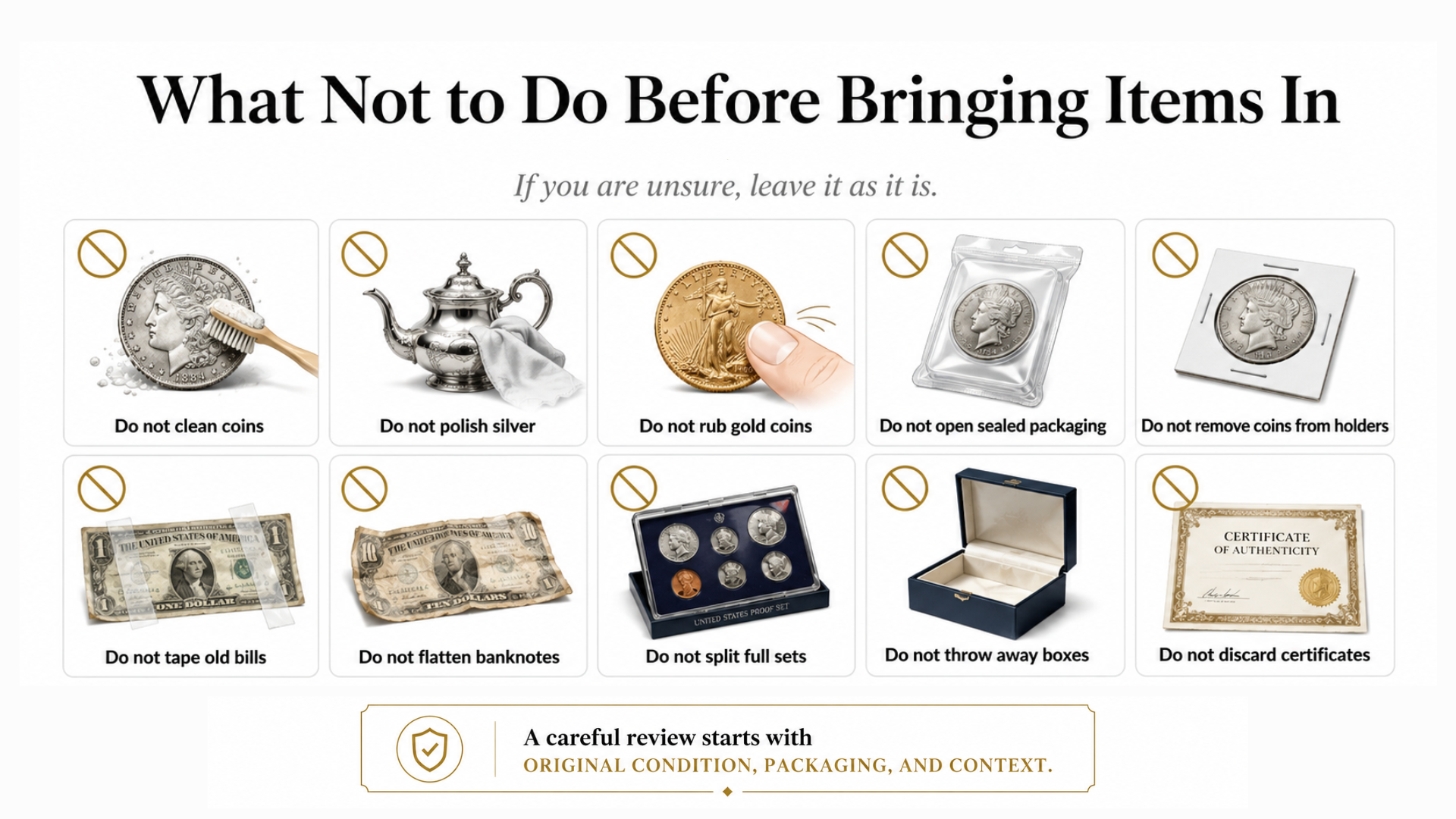
Before bringing items in, avoid this:
- Do not clean coins
- Do not polish silver
- Do not rub gold coins
- Do not open sealed bullion packaging
- Do not remove coins from holders
- Do not tape old bills
- Do not flatten old Canadian bills
- Do not press banknotes
- Do not separate full sets too quickly
- Do not throw away boxes
- Do not discard certificates
- Do not sort everything only by face value
- Do not assume damaged items have no value
A dirty-looking coin may still be better left alone. A torn old bill may be easier to judge if it has not been taped. A sealed gold bar may be better reviewed in the package. A diamond ring may be easier to understand with its setting, receipt, or report.
The safest rule is simple: If you are unsure, leave it as it is.
Before you visit: If you are unsure whether to clean, open, remove, flatten, or separate something, leave it as it is. A dealer can usually review it better in its current state.
Quick Checklist Before You Visit
Use this simple checklist before bringing coins, gold, silver, banknotes, diamonds, or mixed collections for review.
Item Type | Bring This | Do Not Do This |
Coins | Albums, tubes, holders, graded slabs, boxes, certificates, receipts | Do not clean, polish, or remove from holders |
Gold & Silver | Coins, bars, assay cards, sealed packaging, receipts, weight or purity details | Do not open sealed packaging or remove assay cards |
Banknotes | Sleeves, folders, envelopes, albums, graded holders, related notes | Do not fold, tape, press, clean, or flatten |
Diamonds | Stones, jewellery, GIA reports, appraisals, receipts, boxes | Do not remove stones from settings before review |
Mixed Collections | Bring the full group with notes, labels, boxes, and paperwork | Do not split sets or leave “ordinary” pieces behind |
This checklist does not decide value by itself. It simply helps the review start with better information. A careful review depends on what the item is, what condition it is in, and what supporting details are available.
Collectors repeat this warning often because cleaning can turn a coin with collector interest into a damaged coin very quickly.
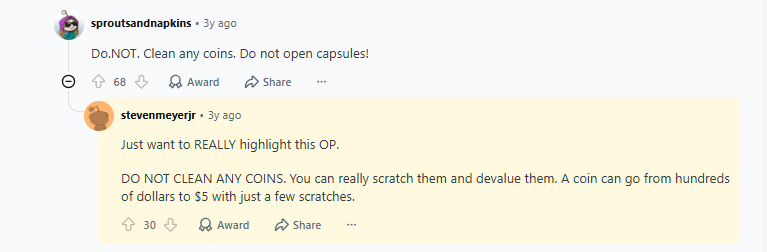
Real collector discussions repeat the same warning: before selling or reviewing coins, avoid cleaning them, keep related items together, and let condition be checked properly.
Final Advice From B&W Coins
It is normal not to know exactly what you have. Many people bring items from a parent, grandparent, estate, safety deposit box, drawer, jewellery box, or old collection. They may not know what is common and what needs closer review.
That is okay. Your job is not to value everything before you arrive. The best thing you can do is bring the items together, keep packaging and paperwork, and avoid changing anything before review.
If you are unsure, ask first. B&W Coins is located in Brampton and helps customers from Toronto, Mississauga, the GTA, and across Canada review coins, gold, silver, banknotes, old Canadian bills, diamonds, and collections.
The same advice comes up often from experienced collectors: do your research, keep the items safe, and speak with a reputable local coin dealer before making a decision.
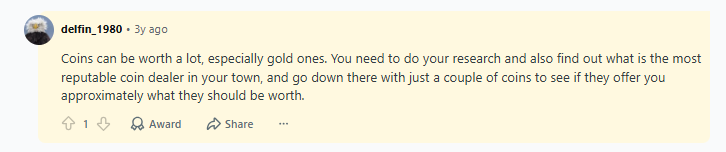
A good review starts before the counter. Keep things together. Leave items as they are. Bring anything that may help explain what you have.
Frequently Asked Questions
Do I need to know the value before bringing coins in?
No. You do not need to know the value first. Many people bring inherited coins, old bills, gold, or diamonds without knowing what they have. A review helps identify the items and explain which details matter.
Should I clean coins before a review?
No. Do not clean, polish, or scrub coins before a review. Cleaning can leave marks, reduce collector appeal, or make conditions harder to judge. Bring coins in their current condition.
Should I bring boxes, certificates, or old receipts?
Yes. Bring any boxes, certificates, assay cards, grading holders, receipts, old invoices, or collector notes. These materials can help confirm details and explain the item’s history.
Can I bring mixed items like coins, gold, banknotes, and diamonds together?
Yes. Mixed collections are common. Bring everything together if the items came from the same family, estate, drawer, safe, or collection. Related items can help give better context.
What should I bring for old Canadian bills?
Bring old Canadian bills flat in their current sleeves, folders, envelopes, or holders. Do not fold, tape, press, clean, or flatten them before review.
Can items still be reviewed if I do not have paperwork?
Yes. Paperwork can help, but it is not always required. Bring the item as it is, along with any details you do have, such as where it came from or how it was stored.